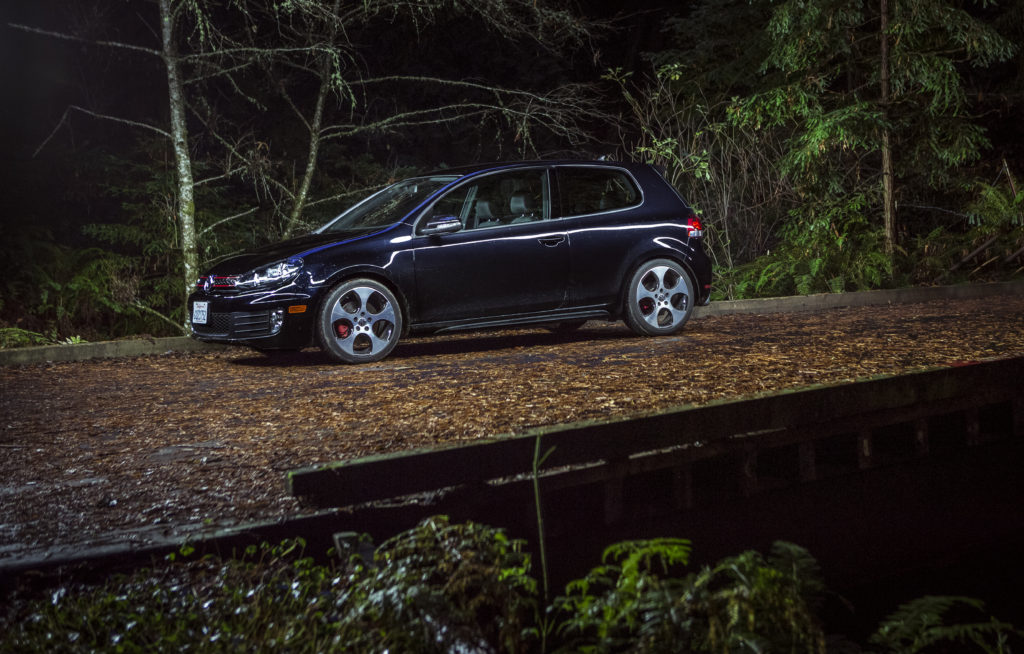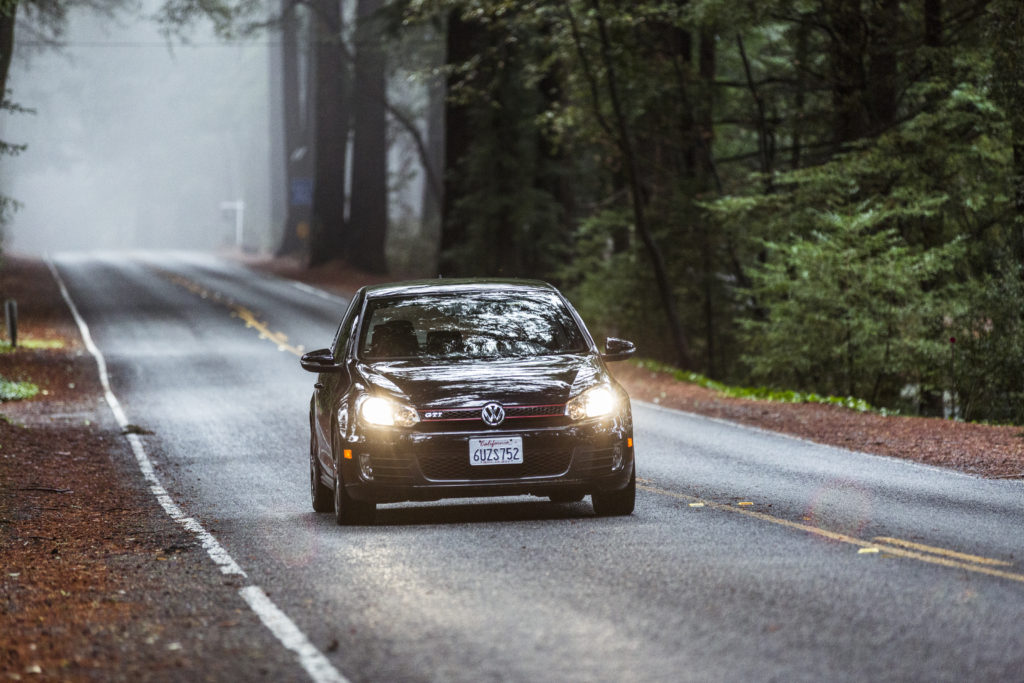

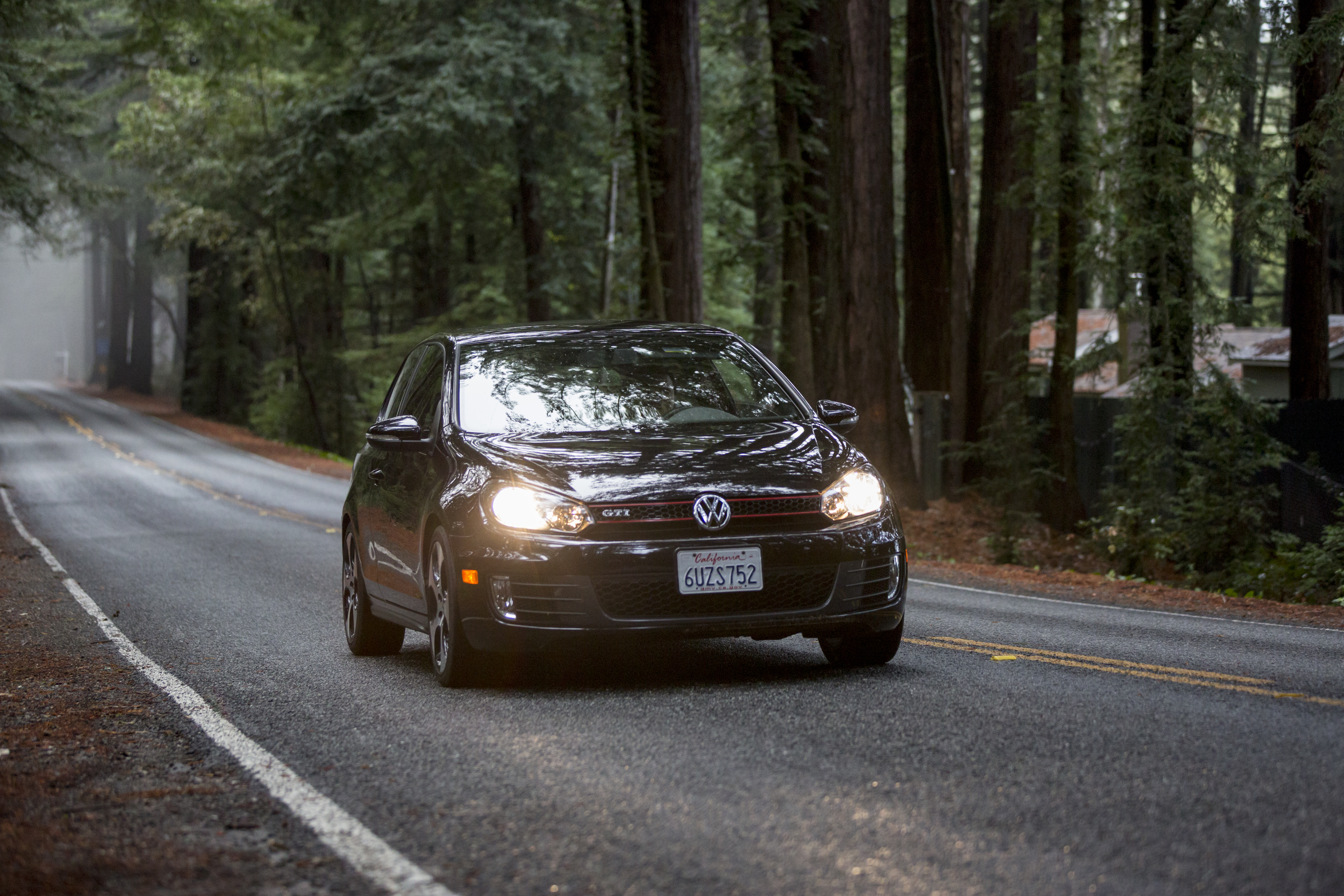
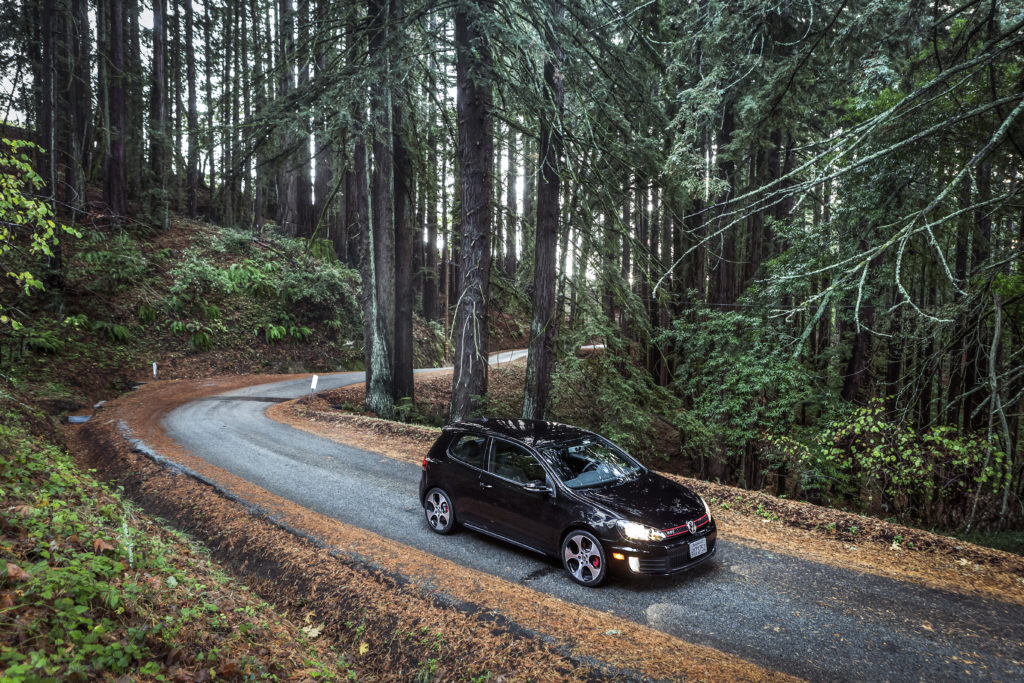
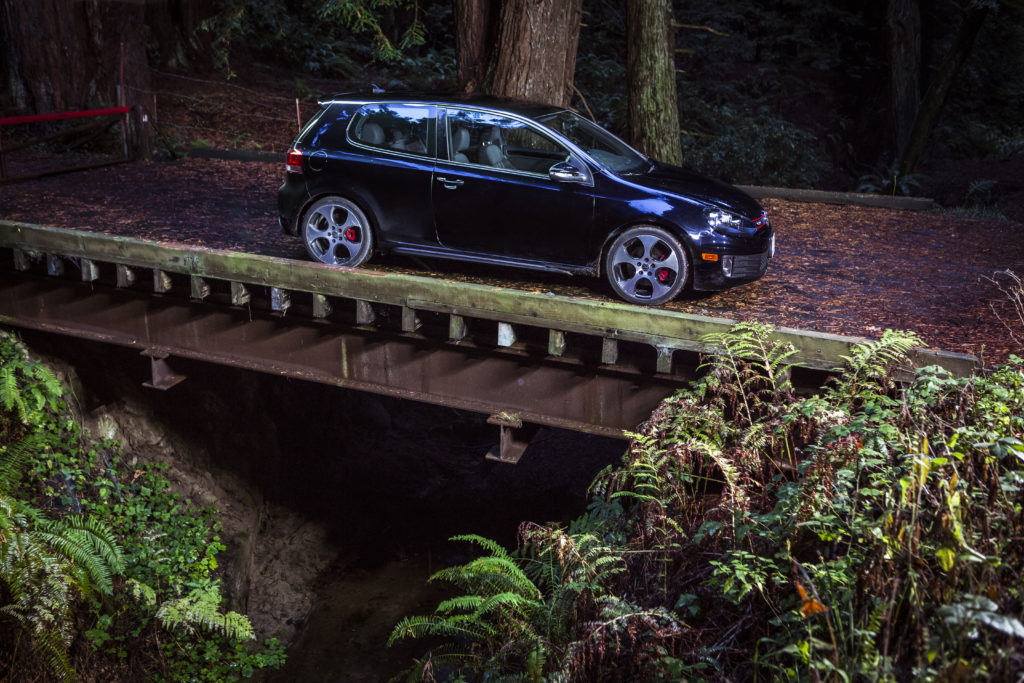
One of the easiest ways to go faster— i.e. generate extra horsepower—in cars built in the last few decades is to remap the car’s electronic brain. Service providers often allege that not only will their work allow the engine to develop more power, gas mileage will improve too due to the efficiency of the new, bespoke engine management tune. By definition, “chipping” must compromise reliability, since components such as clutches and driveshafts engineered to manage ‘X’ horsepower are now being subjected to ‘X+’ horsepower. The practice remains extremely popular since most people “chipping” a new car do not expect to still have the car four or five years or thousands of miles down the road, and the change is both easily reversed and impossible to detect without diagnostic tools. Illustrating this, the car I drove was leased, and soon to be returned. As the current keeper gave me the keys, he explained it had 274hp, up about 50 from standard, adding how “front wheel drivey” it was, a comment I remembered throughout my time with the car.
Immediately it was noticeable how On Boost/Off Boost the Golf felt. The turbo spooled up willingly enough from almost anywhere in the rev range, but there was a discernible pause around 3500 rpm where the car seemed to think, “Oh, you really mean business, do you?” and a lot of power arrived with a bang. I am not familiar with the first generation of turbo road cars—Porsche 930s, Audi Quattros—but this felt like the turbo lag I have read about them having. Or like an old Cortina I had with a twin-choke carb, where the second choke tended to stick, and would suddenly open with a bang. Not uncontrollable by any means, and quite good fun around town, although it does tend to bring out the teenage boy in one.
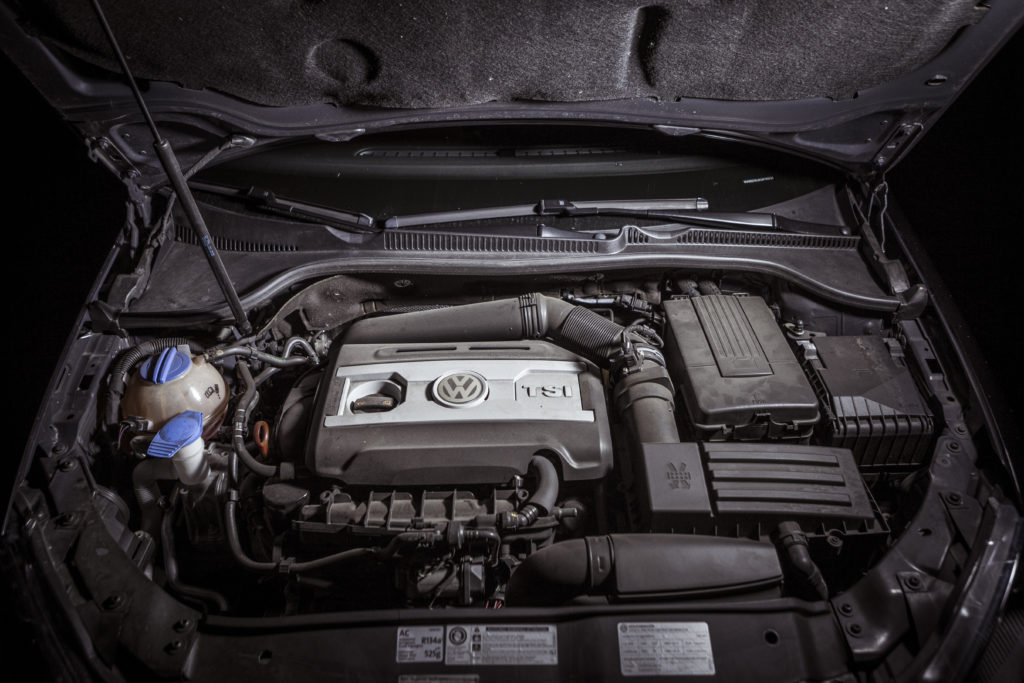
The six-speed transmission was super slick, the clutch feather light and forgiving, and the overall impression was that it was so easy to use as to be midway between a stick shift muscle car and a modern automatic in terms of operating effort.
Even cursory examination of the Golf’s performance seemed to encourage other road users to want to beat me in the traffic light Grand Prix. One expects this kind of foolishness when driving a Fox Mustang, but was rather surprised that the Golf generated even more of this sort of attention—I had thought it too civilized.
Civilized is certainly the word for the interior. Memorable features: the gauges have blue light illuminating them, and the seats had a tartan weave pattern on them reminiscent of the Mk1/Mk2 Golfs, but without the retro cheese overload of say the center speedometer in the Mini. The Golf Mk7 I recently experienced is an incremental improvement here, feeling better thanks to higher quality materials and more silver accenting breaking up the relentless Wolfsburg black.
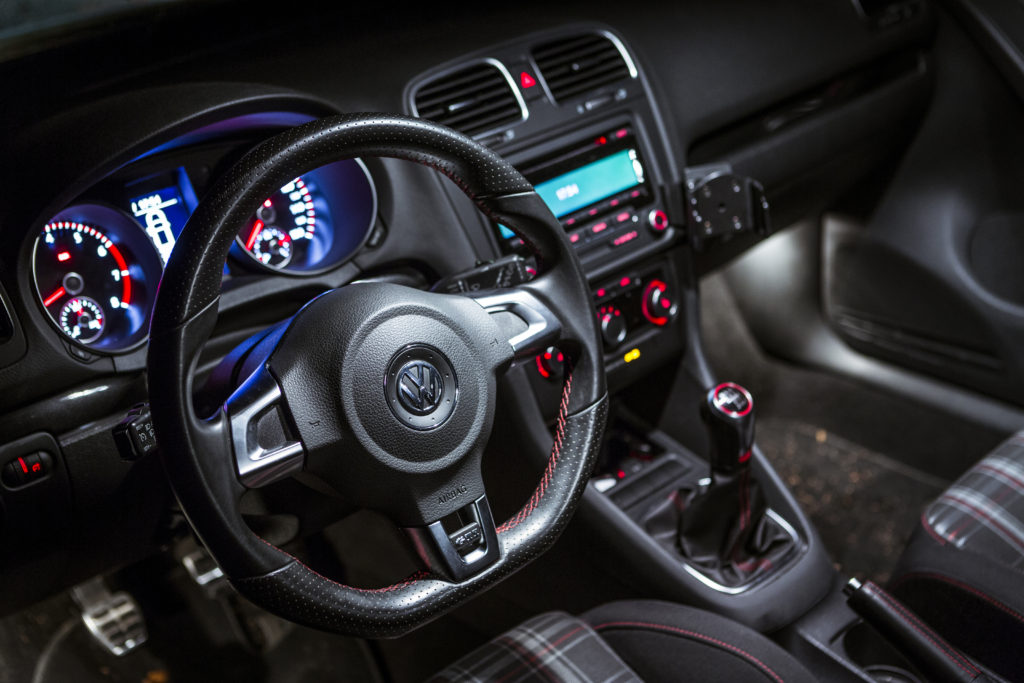
But civilized is certainly not the word for how the Golf drove. Out on the highway, there was drizzle, and as I came in the gas to pass an 18-wheeler, accelerating from perhaps 65 mph, without warning the front wheels broke traction, the nose of the car pulled violently to one side. So brutal was the torque steer my passenger noticed and commented. I had applied perhaps a quarter of an inch of throttle, yet the car had reacted as if I had pressed the pedal against the floor. Taking long curves became more interesting, because injudicious use of the throttle mid-turn could lead to terminal understeer off the road—with or without traction control, which, by the way, was on throughout my time with the car.
Torque steer was a feature of the Focus ST but it seemed to complement the Ford’s character; it was less violent and more predictable too. On the face of it, the Golf is more sophisticated, an understated appearance offset by super cool telephone dial alloy wheels and the tartan upholstery versus the Focus’s ST-only aggressive front clip and “Stop Me Please Officer” colors like Tangerine Scream—though actually the VW was far more thuggish in its manners.
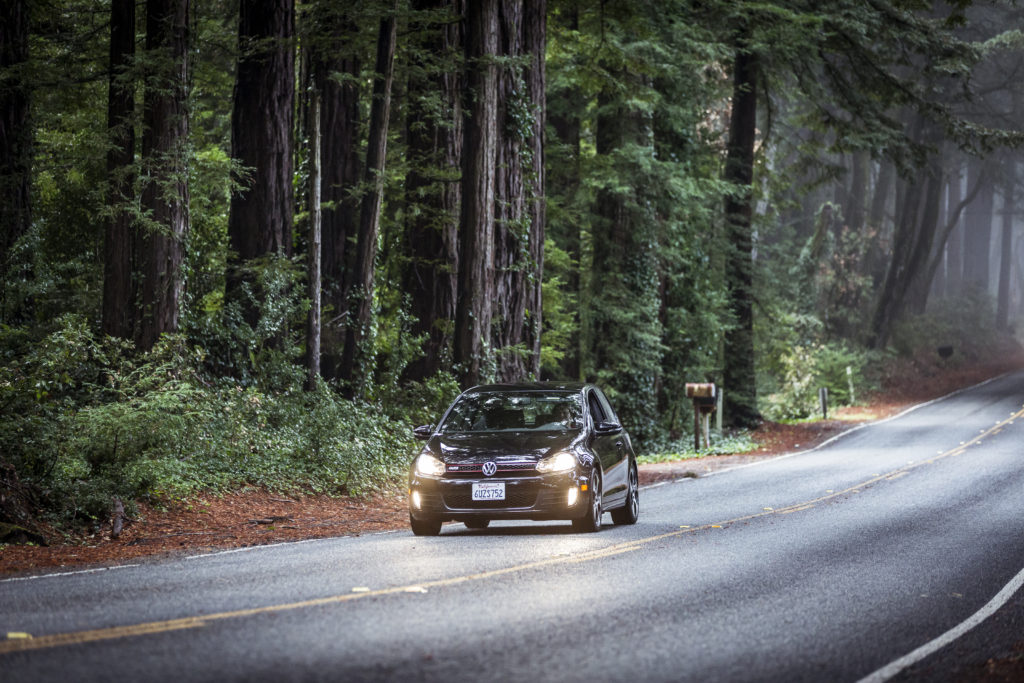
Like the ST, the GTi is effortlessly rapid in the real world, since the chassis and brakes are so good as to allow deployment of all the performance easily and frequently.
The Focus comparison is interesting, since the GTi in standard form is probably a more complete, well-rounded machine than the Focus, but “chipped” the Golf was nowhere near as likeable as the Ford. It felt on edge, caffeinated,—yea, two cans of Red Bull. Far more than ever might be expected, the chip transformed the Golf’s character, and that, far more than any long term reliability implications, is a reason to think carefully before modifying your car in this way.