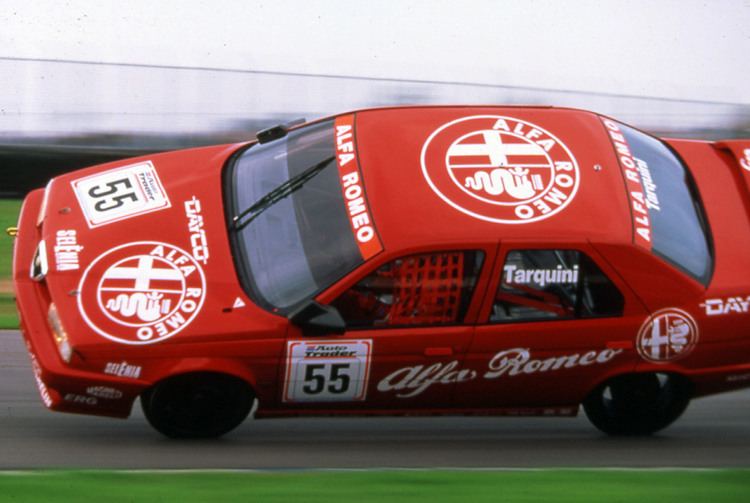


Jon Summers and co-host Mark Gammie discuss the British Touring Car Championship with a focus on its 1990s peak, while placing it in historical context from early British saloon car racing through eras featuring cars like the Ford Galaxie, Lotus Cortina, Vauxhall “Big Bertha/Baby Bertha,” Capris and Rover SD1s. They recall late-1980s/early-1990s battles between Sierra Cosworths and BMW E30 M3s, the excitement of Murray Walker’s commentary, and BTCC’s NASCAR-like contact on narrow UK club circuits such as Brands Hatch, Donington, Thruxton, Cadwell Park, Knockhill, and Snetterton. They cover the two-liter, 8,000-rpm formula, heavy manufacturer involvement, memorable moments involving Tarquini, Mansell, and Plato, the influence of the TOCA Touring Car video game, and how rising costs and aero/regulation changes reduced factory participation and spectator interest after 2000.
NOTE: If you’d like to check out the extended “Producers Cut” of this podcast, be sure to logon to the MPN’s Patreon for an unabridged version of this episode. We also wanted to share the following interview with a modern BTCC champion Robb Holland (Rotek Racing), a former pro cyclist who became the revelation of the SPEED World Challenge in the early 2000s.
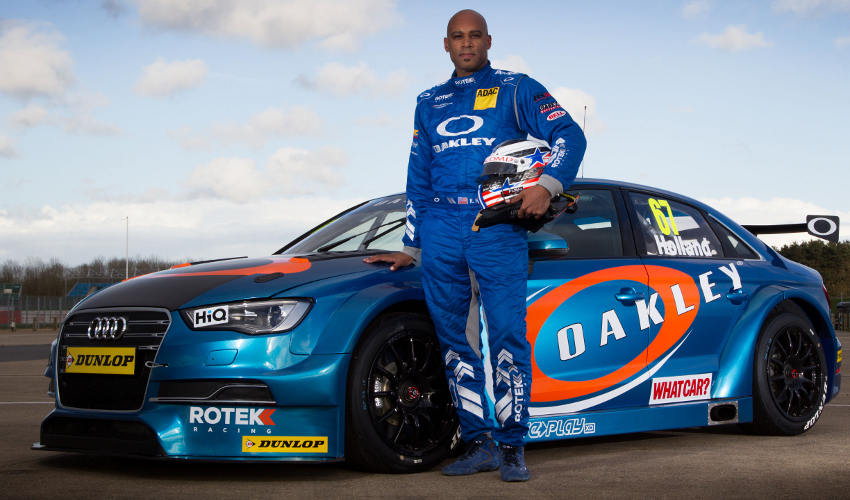
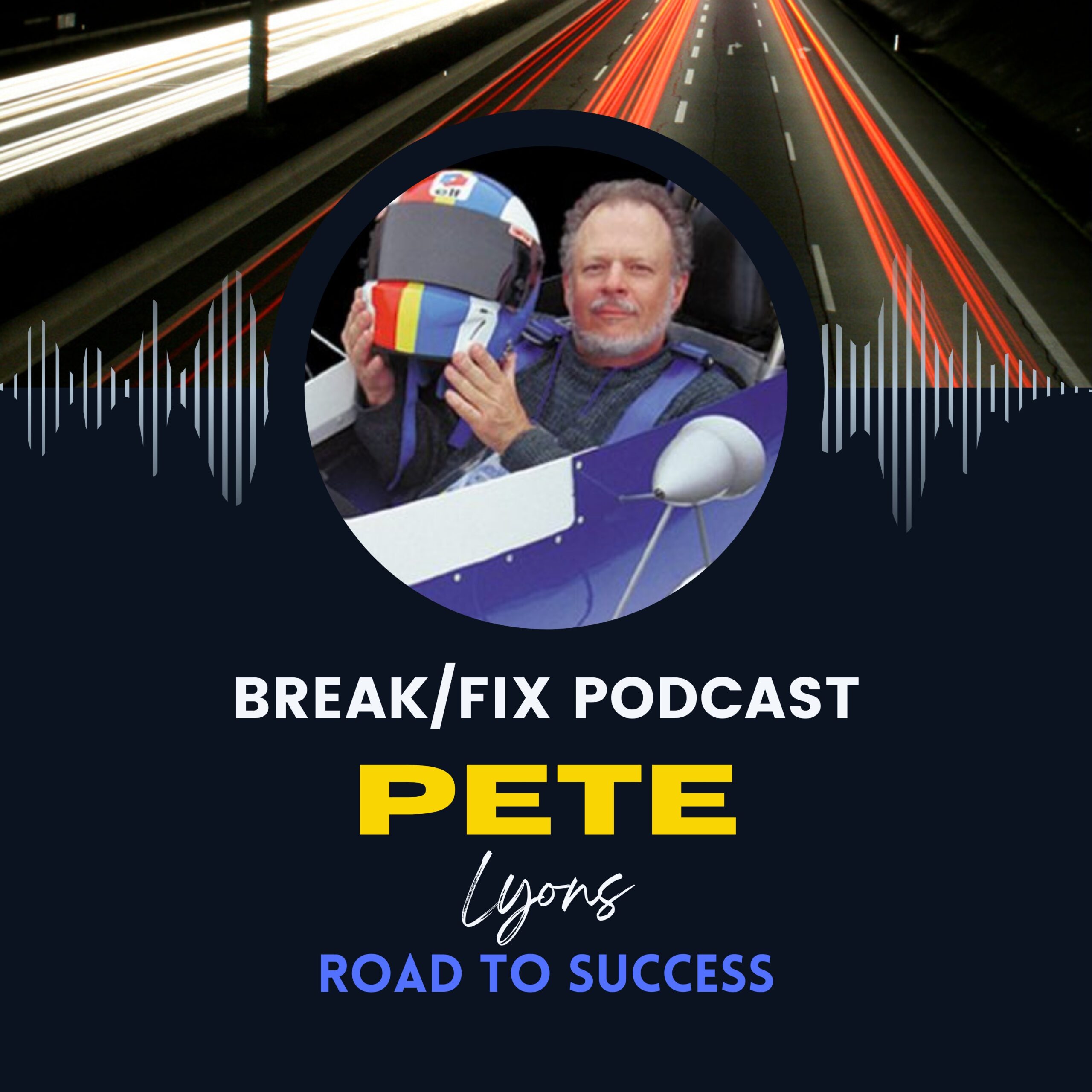
In 2012 Robb rebounded from the late demise of the Volvo factory C30 Touring Car program by becoming the first American in almost 40 years to race in the British Touring Car Championships (BTCC). Check out this story from our partner Break/Fix Podcast from Season 2.
Notes
Jon Summers is the Motoring Historian. He was a company car thrashing technology sales rep that turned into a fairly inept sports bike rider. On his show he gets together with various co-hosts to talk about new and old cars, driving, motorbikes, motor racing, motoring travel.
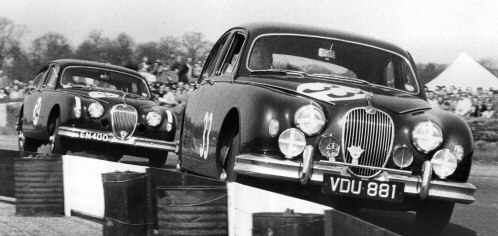
- Hawthorn and Salvadori and Jagiars
- Jack Sears, BTCC Champion and owner of the Bianco Speciale Ferrari GTO
- Jack Sears’ Holman-Moody Galaxie
- Austin A105 Westminster – “But do they have to be so ugly?”
- There’s Only One Gerry Marshall
- Big Bertha
- Baby Bertha
- Bill Blydenstein
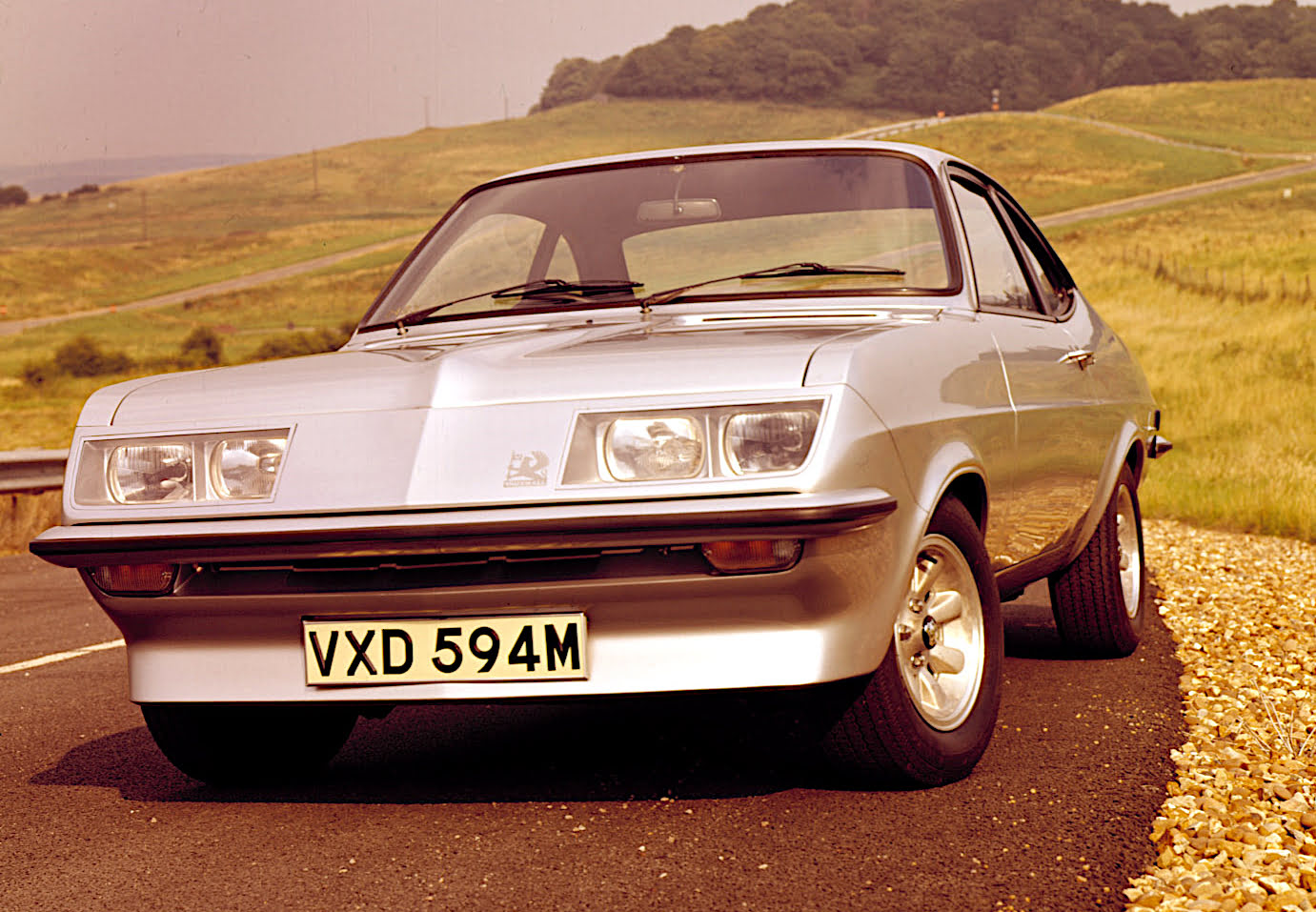
- Vauxhall Magnum and Firenza
- Vauxhall Viva HC
- Jody Scheckter
- Capris and Rovers
- BBC Grandstand and ITV’s World of Sport
- Des Lynam and “Tricky” Dickie Davis
- BTCC as filler between horse races
- The Buick 215ci V8, fuel injected in BTCC Rovers
- Rover Vitesse, 1984 Champion
- Sierras and M3s: Andy Rouse,Rob Gravett, Frank Sytner, Steve Soper
- The Importance of Murray Walker
- A better spectacle than F1; rubbin’ is racin’
- The 90s 2 litre / 8000rpm rev limit formula – cars like the ones we drove as sales reps
- The circuits –
- Silverstone Club
- Brands Hatch Indy
- Oulton Park
- Cadwell Park
- Snetterton
- Knockhill
- Pembrey
- Donnington Park
- Thruxton
- Church Bend at Thruxton – understeer in a Ferrari 360 at 100mph+
- Blanchimont at Spa
- St Mary’s at Goodwood
- Brands Hatch Indy – M driving Hyundai Ns
- Paddock Hill and Druids at Brands
- Jason Plato’s Save of the Century?
- Tarquini on two wheels
- Tarquini upside down
- Nigel Mansell – last to first in a Mondeo
- TOCA Touring Cars, the game
- John Cleland – raced Vauxhalls and sold Volvos – drove the same on the game as in real life
- Tiff Needell commentating
- Croft
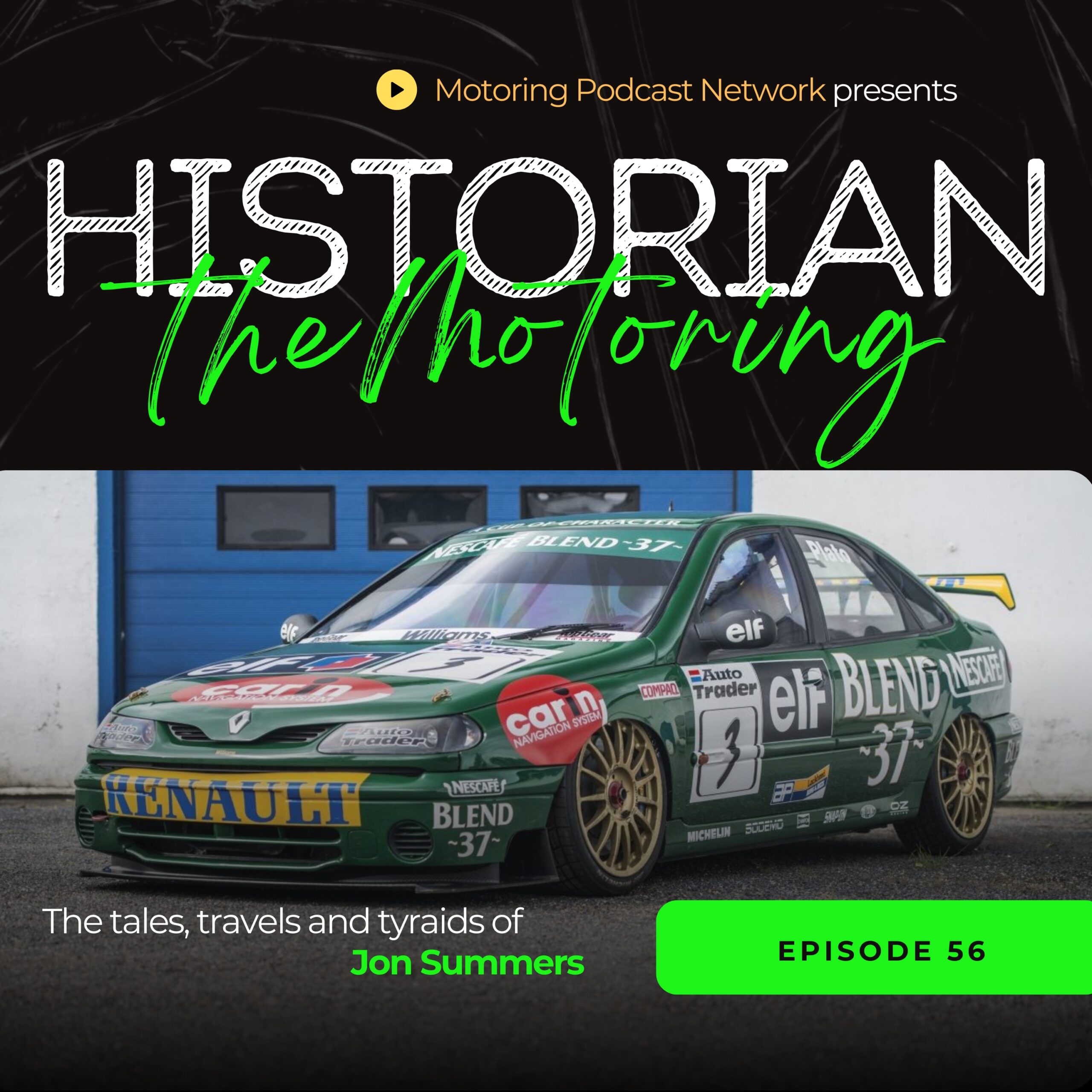
- Blend 37 Renault Laguna built by Williams with OZ alloys
- M’s pool Laguna (similar, not actual car, M’s had no wheel trims and sat lower but was this red and tired looking)
- M’s handbrake turn roundabout technique
- Nissan Primera (Infiniti G20, but with sport tuned handling and revvy inline 4s)
- Primera vs. Hubnut
- M as hunt sabateur
- Jason Plato – Getting Hired at Williams Renault to drive BTCC Laguna – Late Brake Show Interview
- A eulogy to Nigel Mansell
- Taxi – a recommended movie
Transcript
Crew Chief Brad: [00:00:00] John Summers is the motoring historian. He was a company car thrashing technology sales rep that turned into a fairly inept sports bike rider hailing from California. He collects cars and bikes built with plenty of cheap and fast and not much reliable. On his show, he gets together with various co-hosts to talk about new and old cars driving motorbikes, motor racing, and motoring travel.
Jon Summers: Good day. Good morning, good afternoon. It is John Summers, the motoring historian with high school buddy Mark Gamy. How the devil are you, mark?
Mark Gammie: Bongiovanni, sir, I’m, uh, very well, thank you very much. But, um, yeah, doing all right.
Jon Summers: All right. I’m glad to hear it. The British Touring Car Championship, that is our topic for the day.
And, uh, look, with the Russell of the [00:01:00] paper shows that I have an agenda. It’s gonna be a surprise to you. And look, let’s not beat round the bush. Basically what we’re gonna talk about today is BTCC in the nineties, which is the halian period of it. But what I want to do is, uh, put a bit of context, uh, uh, around that a little bit.
My first bullet here is that, you know, the first BTCC championship, can’t remember what it was called then. It was called BTCC is British Touring Car Championship. It was called something different in the fifties, but there’s basically been a saloon car. Championship in Britain ever since, I think 1950 or something like that, like a driver championship.
It’s been around for, for a really, really long time. And in that sense, you know, you probably don’t know this Mark, but this is NASCAR month on the Motoring Podcast Network. So Eric, the producer, loves me to, you know, stay on point. So here I am. I’ve, I’ve done one pod about. Self-driving cars in the [00:02:00] future.
So that fits with the NASCAR theme, doesn’t it? But this BTCC presentation does actually fit with the NASCAR theme somewhat because this is the British version of nascar. This is a series A championship, which travels around the British Isles visiting all of our narrow. Many undulating circuits around Britain and, and Scotland, Wales, that kind of thing, isn’t it?
So the first bullet I’ve got is Hawthorne and Salvadori and racing. Mark one and Mark two Jaguars, which were also their road cars. Believe it or not. They would drive them to and from the track racing them at places like Goodwood.
Mark Gammie: It was the British Saloon Car Championship originally. I looked it up.
Jon Summers: It was one of the first champion, Tommy Sopwith.
Mark Gammie: Uh, it says the inception of the champion was 58 and the first Jack Sears one in 58, apparently.
Jon Summers: Oh, right. Well, that’s awesome because Jack Sears was the very next bullet point on my list. Gentleman, Jack [00:03:00] Sears, a farmer, a name that’s cropped up on this pod really recently because that Bianco, white Ferrari, GTO, the hammered, uh, Meum.
Just recently, he was a second donor of it. I mean he, not the second owner, the third owner, John Coombs bought it new, raced it a bunch, then it was sold to what Coombs describes as that strange man at Slough JA Pierce. So I Googled a who this strange man at Slough was, right. You obviously would, right? I guess he was a racing car breaker.
So he took the engine. Out of it. And that went into a Cooper and that raced quite successfully in like Formula One-ish, kind of of racing through the sixties. So the engine raced on the car was sold to Jack Sears. Who painted it red. So for most of its life, that white GTO was red and owned by Jack Sears and it had a standard two 50 [00:04:00] SWB motor in it.
But that’s nothing to do with the British Tour Guard Championship, is it? The reason that I put Jack Sears down here is because Sears bought a Holman Moody Ford Galaxy. Whether it’s honking 500 horse. 4 27 solid lifter motor that was built for the banking of Daytona. And uh, it cleaned the fuck up in the British Touring car Championship.
I read an account of it where he was like, in the first race, he was like, I won’t drive too hard. But then on the first strait, he just like blew the jaguars like way back behind him.
Mark Gammie: So that would’ve been presumably 63 then because he won in 50, he won the touring car championship in Fi Saloon Car Champ should say, in 58 in Austin.
A 1 0 5 Westminster.
Jon Summers: Yeah.
Mark Gammie: And then in 63 it says, er, he won it again. Ford Galaxy. In Ford. Lotus Cortina.
Jon Summers: Yeah. And thank you Mark, for the, that information because, uh, I feel like that flashes out the variety of [00:05:00] cars that you could win in. Because in Austin, Westminster, I mean it looks quite tall and ponderous, but they were actually pretty good.
And you’ve been to Goodwood more than I have. You see those? Austin one oh fives still racing. I mean, I went up, the last time I was at Goodwood for the revival, there was one racing. What I love about those is they have a piece of side trim on the side of them that looks like a 57 Chevy. But they’re of that pre farina era of BMC cars.
And this pre farina era is important because the reason that the British styling houses went to Italy to get their cars styled was because once the Duke of Edinburgh visited Longbridge, after they’d looked at all the cars, duke of Edinburg in his usual kind of rude way, said, but do they have to be so ugly?
Mark Gammie: Yeah. Least he wasn’t saying it to a person this time.
Jon Summers: Dude, there’s only one. Jerry Marshall. Do you know that name? If you [00:06:00] don’t know the name, Google him up. The Carl’s Big Bertha and baby Bertha. This is dealer team Voxel. Believe it was run by a Swedish chap called Bill Bliden. Stein. All of these names are worth Googling out. He was like a kind of a, not quite Shelby, more of a yen, coy kind of tery kind of guy.
But either way, Ford were Eaton GM’s lunch, weren’t they? And and so dealer team vaw works, GM come with these two cars. Big Bertha is a Voxel Ventura with, I think a Chevy big block, but I’m not completely sure. It might be a small block. Baby Bertha was the one that was really good and this was a voxel forenza.
And the Forenza and the Voxel Magnum, they were like a sort of European Pontiac. They had like Pontiac styling cues all over them. And then for the [00:07:00] hot rod racy ones, the Magnum, which had like a quad headlight nose and a Pontiac like beak, it had this drop snoot put on it, and it became the Vox off phn. I mean, the road cars only had two liters or something like that, but Baby Bertha kind of looked like a forenza, but then had some other crazy motor in it.
And if you look at footage of Jerry Marshall driving these cars, my God, it’s impressive. He was big ginger and drank a shit ton of. There’s a video, there’s a film online, like there’s only one Jerry Marshall, and it is so seventies horrific. You can smell the cigarette smoke and the booze coming off the screen.
It’s really, his friends
Mark Gammie: aren’t actually that different profile side on to the, uh, an escort mark one. Are they.
Jon Summers: Well, of course they are. The, uh, the forenza was, uh, voxels answer to, yeah, you know, escort Mexico and [00:08:00] they were the same size car because the PHNs like a coupe version of, is it the Veeva hc?
There were three Voxel Vivas, the H-A-H-B-H, and if you’re a European car guy, the Voxel Viva was the small GM product. It was like, oh, like an Opal Cadet. I think Cadet was the brand. Well, I, it was Cadet was a brand name that they used in Germany at that time.
Mark Gammie: Apparently. He also, he also won the 71 Escort Mexico Jam Major.
Beating Jody Schechter.
Jon Summers: Yeah. Well that was when Old Schechter was first in Europe from South Africa.
Mark Gammie: Mm-hmm.
Jon Summers: And kind of proving himself, but you know, Schechter, you met him personally.
Mark Gammie: Well, no is a strong word, I think in the circumstances.
Jon Summers: Well, you did this with him.
Mark Gammie: Yeah, yeah, I did, but I did some, I, I sold him some stuff for his, his office down in, um, Hampshire.
They’ve got a, he’s got an estate down there. I [00:09:00] had a look at his car. He took me out to have a look at his cars in the garage. He’s got some of his old F1 cars there and stuff, and signed my Ferrari book. Nice enough bloke blunt, I think is, uh, the way to describe him.
Jon Summers: If you read the stuff about him, I think you got him and, uh, he must have liked you to be nice to you and take time to sign your book and only be like South African blunt because in his racing career, he was beyond.
Blunt. He was really like, you know, he made a statement in the way that he, uh, he drove a bit of a crasher, but I mean, he became world champion for Ferrari.
The next thing I’ve got written down here is Capris and Rovers.
Mark Gammie: Yep. ‘
Jon Summers: cause this is the era where the BTCC comes onto grandstand. ABC’s wide worlds of sport. Americans are very familiar with this show. This show introduce motorsport to people. Will grandstand on a [00:10:00] Saturday afternoon on British tv. And World of Sport.
That was the ITV version of it. They were the only two channels that, well, it was BBC two, but they only showed like sophisticated programming,
Mark Gammie: Des Leham and Dickie Davis, baby Des and Dickie.
Jon Summers: I met Dickie Davis once. Cool. Google him up. He’s really an amusing character, but I met him at Handy Cross Swimming Center in High Wickham before I met you.
I must have been like eight or nine, but he was at the pool. And we were all like swimming. And he came along, he had a shiny turquoise tracksuit on and I remember when he shook hands with us, he was just as smarmy in real life as he was on tv.
Mark Gammie: Yeah. Good.
Jon Summers: So we miss your chicky Dicky Davis, don’t we? We do, but look right, this is relevant to the BTCC because between like three 15 from Lingfield and the four 30 from Newbury horse racing, big sport in England.
Gambling. It’s gambling that drives it. There’s legal [00:11:00] betting in England. You know, there’s betting shops that you can go in on the high street in town, like next to the tab tobacconist or whatever. So horse racing’s a big deal in, in England and people like my granddad used to be like tuning in for the three 15 to Lingfield because you know, they had a tenor riding on, you know, one of the horses kind of thing.
Well, well, the BBC would like to like put others content in between and, and so Rally Cross was part of that. Rally Cross is like where you drive a bit on the track and a bit on the dirt and it’s jumping around and in the mud and, you know, rally Cross was designed for tv.
Mark Gammie: Yeah, it’s brilliant.
Jon Summers: I think by the late seventies, early eighties, by the era of Capris and and rovers.
The rovers, these were SD ones, but these were SD ones with the fuel injected version of the olds. It’s not the old, the little Buick two 15 that Buick sold to Rover [00:12:00] in the early sixties. ’cause they didn’t have much purpose for it. Well, by or by their late seventies, early eighties bl were fuel injecting it.
So this is the rover Vitas that you’ll remember the police using ga. Mm-hmm. 135 mile an hour car in stock form. I remember the, the shtick with them now is, some of them are twin planum or something. That’s what drives the value of them. The twin plenum ones are worth more than the non twin plenum ones, and it seems to me it’s like four cam, 2 7, 5 GT Bs and two cam ones.
It’s like well just have the two count. One is cheaper. It’s gonna be easier to maintain.
Mark Gammie: Have the one that hasn’t rusted to bits is probably the best advice.
Jon Summers: With those Rover SD ones. Yeah, completely. But Ro versus Capris, that was pretty good racing, wasn’t it? They both
Mark Gammie: had eight four. Andy Rouse won the championship in a rover vi Tes having previously won it the previous year in an alpha Romeo GTV six.
Jon Summers: Oh wow. Yeah. I’d forgotten about those. GTV sixes. Uh,
Mark Gammie: yeah. Yeah. Well, I mean, dude, like I, I’d forgotten in 80 and [00:13:00] 81 ’cause I wasn’t watching it ’cause I was too small. Win. Percy was picking up the title in Rx Sevens.
Jon Summers: Oh wow. Wow.
Mark Gammie: He then won again in 82 in a Corolla, slightly less. Wow.
Jon Summers: Yeah,
Mark Gammie: but none of those, I mean, still an impressive feat.
Jon Summers: That covers the early period, doesn’t it? So that’s before we tuned in. So now I’m gonna come at you with, that was by way of intro and positioning. Almost. Now I’m gonna come at you with the, what’s your earliest memory of BTCC? It must’ve been on the couch watching grandstand, right?
Mark Gammie: Yeah, of course.
Jon Summers: What would the cars racing, who were the drivers?
What do you remember?
Mark Gammie: I mean, the earliest I was probably watching, it would’ve been late eighties, early nineties. So
Jon Summers: M threes, Sierras and m
Mark Gammie: threes. M threes, yeah, exactly. M threes and, and Sierras. And,
Jon Summers: and to be clear on this guys, so this is the three door Sierra Cosworth with the big wing on it.
Mark Gammie: Yeah.
Jon Summers: Texaco all the bats. Sponsorship, the drivers. Andy Rouse, [00:14:00] Rob grt.
Mark Gammie: Yep. The
Jon Summers: BMW’s first generation M threes. E thirties. E. Yeah. Yeah. M threes down on power next to the Sierras. So on a circuit like Silverstone, they weren’t winning. But on a circuit like brands, ooh, they maybe could drivers James Weaver and Frank Siter, they’re the two that immediately come into my mind.
Mark Gammie: Will Hoy,
Jon Summers: oh, Steve Sopa, I, I believe your man Sopa was, was around in the M threes at, at at that time. So that was, was, I remember seeing it on TV at that time. And I, I wanna mention another important element there, which is Murray Walker.
Mark Gammie: Oh mate,
Jon Summers: because Murray was important, wasn’t he? Murray made it sound like you were watching Formula One.
’cause Murray was the voice of Formula One and he was so excitable and the cars were crashing left, right, and center.
Mark Gammie: I think that’s, that’s the key. Yeah. You know, let’s be fair, Murray would get excited [00:15:00] about al boring shit because the guy had to make Formula One exciting. Yeah, and like, you know, there might be a couple of good overtakes in the whole race.
Well, that isn’t BTCC, to be fair. Also, the F1 race would be like an hour and a half long, or sometimes a bit shorter if it’s monza. Sometimes longer if it’s raining. But touring cars, no, none of that. There was fairing rubbing, there was sparks off, like chin spoilers hitting the deck and being driven over.
There was all that sort of stuff.
Jon Summers: See, there’s your NASCAR parallel. It is like nascar rubbing is racing in BTC.
Mark Gammie: Yeah. Rubbing, it’s definitely racing. There’s plenty of that. And of course the cars were robust enough that, you know, one little twang with, you know, with the barrier and probably carrying on, you
Jon Summers: know?
Yeah. Well of course that was part of what killed it in the end, wasn’t it, was when the arrow came. Any little GY bargy, and your car was fucked for the rest of the race, whereas in the early days, they were exactly like your company cars in that you could crash ’em up a curb and it was still drivable afterwards, you know?
Mark Gammie: Yeah, yeah. And especially if it was [00:16:00] rainy, they’d come in, change tires, and the mechanic would be beating the panels out with a hammer and stuff, or pulling bits off the car. Yeah. So as you know very if Yeah, exactly. Well, exactly. And if you are like a teenager or uh, a bit older or a bit old, it’s great fun to watch.
You know, it is, it’s quicker hit racing and of course these days there’s a couple of races, I can’t remember if they were always a couple of races or not, but I mean you’d get cracked racing on some really good circuits that formula me to one guy go to ’cause they’re too fast and it would be too dangerous.
Jon Summers: Talk about the circuits a little bit ’cause we were gonna do an episode talking about British club circuits. Let’s talk a little bit about club circuits that we know quite well. ’cause guys, the next step with the BTCC is the two liter 8,000 RPM rev limit formula, which is the period that we remember very well where basically the cars racing looked like the cars in our company carpool.
So when the Nissan Primera did well, when you. Got given and Nissan Primera as a pool car and then it revved like the devil and went round [00:17:00] corners really well. You really did believe there was a, not a like win on Sunday, sell on Monday kind of thing, but you really did feel like the products actually reflected the ethos of the racing, didn’t they?
And uh, you know, it’s, it’s like my Pontiac with the eight lug wheels that they developed because wheels kept falling off the NASCARs. It had that kind of thing going on for it at, yeah,
Mark Gammie: definitely.
Jon Summers: Club circuits. What’s your favorite club circuit in Britain to to drive on? ’cause all of these club circuits, guys, the BTCC would visit each of them sometimes.
I think some years, multiple times. Like in the same year. Yeah. And a circuit like Silverstone wouldn’t necessarily be the Grand Prix circuit. They used to just use a limited version of Silverstone called the club circuit. There was basically just a triangle, you know, you do the old start, finish cops, then up to maggots, but then at maggots, instead of it being a left, you’d do a right, drive down the main runway, that was the [00:18:00] main straight, and then come straight to Woodcote.
So it was a bit of a
Mark Gammie: Yeah, it’s the same at Brands Hatch. You’ve got brands Hatch Indie, haven’t you? So that you, yeah, you do the, the chica, the hairpin come down the hill, hang a left, and then you wouldn’t turn left to go off up towards the, uh, the back fast section up past the, um, the sweeping turns.
You’d just go off and around the big loop and back on the staff finish. But,
Jon Summers: so if I, if I think about circuits, the, the, you know, as a listener, you should Google up and watch an onboard lap of, if you don’t know brands. The undulation change is unbelievable, right? I know most British club circuits are meant to be like airfield circuits and flat, and we’ll talk about those as well, but there’s plenty of British circuits isn’t there with really great surface change.
So with brands, there’s that massive undulation. Another one Undulates a lot is Ton Park.
Mark Gammie: Yeah.
Jon Summers: Cadwell is the one where on a bike you can get air. In fact, it’s hard not to get air. The
Mark Gammie: mountain.
Jon Summers: The mountain, yeah.
Mark Gammie: Yeah. Um, [00:19:00] and that’s worth Googling up if, if you like put in BSB British Super Bikes and jumps over the mountain or Cadwell Park, and you’ll see bikes with the back wheel 18 inches off the floor and the front wheel of like four or five feet off the floor.
It’s ridiculous.
Jon Summers: Viewers will know serin ’cause the name’s memorable. Yeah. But if you look at serin, serin is flat and really windy and, and there’s a long straight, and the other one that I think about in the same context as Serin, that always felt really like kind of rough at the edges. A bit of a North Wil wilkesboro was Knock Hill that went up in Scotland.
They go to Pembury, they do Donington Park and Donington Park has that, you know, left, right suite where Sena made that. Awesome. Arguably, you know, the pass of his career, the pass of Formula One, you know, they do donnington as as well. They do a shorter version of the Donnington circuit, wouldn’t they?
Mark Gammie: Yeah, they’d lose the last little bit, but like, um, Thruxton as well.
Jon Summers: Oh yeah. Yeah. I mean that’s
Mark Gammie: probably the one I’ve
Jon Summers: [00:20:00] driven the most. I did a track day at Thruxton. First time I ever drove a Ferrari and I got under steer, uh, over a hundred miles an hour in this 360 through church. So church, church
Mark Gammie: is scary.
Jon Summers: Yeah. And there
Mark Gammie: are lot, I took the three 50 through there at like, just, I mean, between 90 and 95, probably near a 92 be told.
And it is scary to keep your foot. I mean, you’ve pre set it up right. But it’s a long grass runoff.
Jon Summers: It’s almost like, uh, what’s it called? That one at spa, that’s the lefthander towards the end of the lap where you basically like lift and turn in, but all you can see is the trees. So you’re like turning into, not quite a blind turn, but a much shut up, you know, a turn that you can’t see through, and you are turning in with the car borderline rang out.
Like even in a fiesta st you’re doing like a buck 20.
Mark Gammie: Yeah, no, that is, that is fairly scary on the way down to the bus stop. Yeah. I mean, the one I’ve driven the most is, is. Thaxton, I guess. And I do like it because although it’s fairly flat, you don’t get a [00:21:00] huge amount of elevation change and that, you know, he’s, he’s not brilliant for it, as we’ve discussed before.
It’s apparently, unless it’s been resurfaced pretty sandpapery. So be careful if you’re doing it in a bike in leathers. But in a car, I mean, church in the back sections up towards church are some fast sweepers that you sort of just have to know the track’s gonna be there and just turn it in and it, it is there every lap, which is nice.
Um, but still, you don’t know it’s gonna be there.
Jon Summers: It’s not like the cork screw, right, the cork shoe’s. All technical. Yeah. Where you have to like pick a point to turn in and, and all of that. The British Club circuits, they’re more like, I’ve been playing Goodwood a lot on Grand Tomo, and, and the more I play it, the harder I find St.
Mary’s, particularly that first corner that is a difficult corner. It’s like the first turn at Suzuka. It’s like a double apex kind of a guy, but it’s off Canberra. And it sort of gets the car loose before there’s the main part of the turn. It’s really, uh, the harder I try the crapper I am.
Mark Gammie: It’s, [00:22:00] I mean, I’ve not driven Goodwood, so I mean, obviously I know the circuit well, but yeah, that first turning is a, is really sort of two turnings.
That you sort of have to thread together and you can sort of see that in how the cars are set up and shimmying and stuff as they go through the first part of it. And then it’s how early can you get on the power to get on that sort of front, little straightaway down to the next turning.
Jon Summers: Yeah.
Mark Gammie: Um, so I, I mean, I like thruxton.
Brands Hatch. Even the brands Hatch indie circuit that we did, when I test those, those, um, I 30 Ns when they came out is good fun because you’re right, coming down the main straight and then into that righthander where it just falls away. On the outside you’ve got,
Jon Summers: is it Padac? Yeah. Is that what that corner’s called Padac kill Ben?
Mark Gammie: I think so. And you, but you, again, you could be doing quite a speed even having come onto it from the short bit onto that back straight and then it just sort of like falls away from you. So you know, you have to get your, if. In the rain, I imagine it’s terrifying. I didn’t do it in the rain because if you turn that, you know, turn in and it doesn’t bite, first time, you’re gonna run wide and it’s not a massively [00:23:00] wide sand trap.
And then the fence and you know, if you don’t, aren’t fully committed, you’re gonna lose too much time coming round there and you’re then going into a hairpin where someone can stuff it up the inside. So. The nice thing with that hair is ’cause it’s uphill, you’ve got quite a bit of grip on it, so you can roll into it pretty quick even though it’s quite tight.
Jon Summers: So I, it’s since, as we’re talking about Padac Kill Bend and we’re talking about the BTCC, I should mention that Epic save that Jason Plato makes in that Xi little Chevrolet through Padac Keel Bend. And I’m gonna add a clip to it. If you’ve not seen it before, it is borderline the greatest save of all time.
Mark Gammie: And I, I suppose it, we ought to be said at this point that, you know you between if we’ve driven a lot of these circuits, but not all of them because there’s a lot of ’em. You know, there were a lot of these little nary ass circuits around the UK and not kills a fair old way up to Scotland and there are others in the north of England.
Donnington is a fair old way up. I mean, I’ve done that on a motorbike and stuff and it was pretty cool. I mean, really cool. I really enjoyed it. But you know, again, you’re conscious how slow you are [00:24:00] because although it’s not very wide. I mean, the, the actual track itself isn’t very wide. You can still go swing from one side to the other, and especially on a bike, if you are committed enough, you can take a lot of corner speed to those apexes.
So
Jon Summers: that’s a great insight because that’s the case with what we’re saying is these are narrow tracks. Yeah. So passing in, uh, European sized car. Like Fourth Sierra or, uh, voxel. Vectra, you know, you’ve got two of them alongside each other. There isn’t room for a third one on the, on the track, right?
Mark Gammie: No. It’s touring cars.
So someone’s gonna try and put it there if there’s a fag paper of size gap in between it. Yeah. And like for anyone who hasn’t seen Gabrieli Tarquini in his 1 5, 5. Then go and have a little look on, on your, on your YouTubes again. Yeah, that manual cycling rating.
Jon Summers: I have a section at the end where if there are particular incidents that we’ve not mentioned as we’ve been talking on the call, we should highlight this.
And Tar Queeny on [00:25:00] two wheels in the Alpha 1 5 5 was fully, uh, was fully, yes. So this was what tour cars was like in this nineties. A former Formula One driver coming to a domestic series on club circuits, airfield club circuits, but where the people building the cars were like Formula One teams.
Mark Gammie: Yeah.
Jon Summers: Building the cars. So this alpha that Tarweed had, I don’t know who had built it or anything like that, but it was a shit ton better than what any anyone else had. But yeah, they would drive them absolutely. Like they stole them and it was a contact sport. Yeah. So yeah, there’s this awesome picture of tarquini.
Well, rolling it isn’t it? There’s, it’s fully like upside down. He like end over ended it completely, didn’t he? There’s a photo of him on, on two wheels, but he did the complete end over end. And in fact, so whilst we’re talking about this, let’s do another moment in the sport. [00:26:00] Do you remember when Nigel Mansell.
Raced to Ford Mod at Donington.
Mark Gammie: Yeah.
Jon Summers: Do you remember the wreck that he had?
Mark Gammie: Yeah. Although didn’t he raise, he He came from last of first in one of the races.
Jon Summers: Yeah. I mean
Mark Gammie: in the rain.
Jon Summers: Yes. Yeah, so that’s the point, isn’t it? The IT produced Epic Motor Sport drama. The. You really saw that somebody like Nigel Mansel came and really tried.
It was like win or crash for these F1 drivers who came to do one drive. And it was awesome as a, I mean, it was just a win-win win, wasn’t it? Because, you know, as a spec you loved it. Uh, the sponsors absolutely loved it. Probably the only people who didn’t like it were the other drivers who were in the series all the time and were being pushed out of the way by a Formula One driver who didn’t give a shit about.
Points or cost of the car or, or or anything
Mark Gammie: like that? Yeah, I mean, it’s happened, it happened at other times, isn’t it? I guess in motor GP when they’re like replacing a driver and stuff here and there back in the [00:27:00] day. But like I was gonna say, I got distracted. It does better. In, uh, talking about briefly, the Toka touring car for the PlayStation.
Taught me all of these circuits. You know, I’d seen ’em on tv, but you wanna drive them Toka Touring Car is your edge, but you can still get it. I looked it up. You can buy the Goodbye the old game and the reviews of it are good. Now I can give you a personal review. Having driven it for probably, I don’t know, 50 to a hundred hours with Dens and you sitting around on the sofa playing those, those games notable for a bunch of things.
One, it had damage on the cars.
Jon Summers: So let’s contextualize that a little bit. So after the Sierra M three era, the rules that came in, it was a two liter formula with a rev limit of eight grand. Yeah. And, and this is the formula, you know, throughout the nineties, this was the formula that held, and the cars evolved a little bit and they certainly evolved from being.
Further away from road cars, but the circuits were pretty consistent at this time. You know, [00:28:00] the, the, and, and what you saw through this period was increasing manufacturer involvement. So we were talking at the peak, you know, a dozen manufacturers being involved. There was a sense that if you weren’t involved, what were you doing?
It wasn’t like in NASCAR where there’s only like three makers. It’s, it’s, it, it, it was. Literally, there were a dozen car makers all with works entries. What were works entries, but they weren’t really works entries. What it was, was there was a, a dealer who was building and racing the cars themselves.
Typically,
Mark Gammie: to give you a flavor of this, 92, from 92 through till 2000, the manufacturer winners were B-M-W-B-M-W, alpha, Romeo, voxel, Audi, Reno, Volvo, Nissan, Ford, and Vaw again. I mean, that’s what, seven different manufacturers in a row. So you know, it, it was, it was cracking. There was, there was, there was money in it and it was on tv.
Jon Summers: I remember [00:29:00] feeling as a spectacle on tv. It was better than Formula One. I remember feeling almost, I was betraying Formula One by feeling like that. ’cause whilst Formula One was more pure, the RG barge that was then over after 20 minutes,
Mark Gammie: it was better racing. There’s no argument it was better racing.
Just flat out can’t, it can’t not be, I mean it’s like a sort of. Yeah, it’s a sort of crack hit, isn’t it, in terms of, uh, impact.
Jon Summers: That’s how it felt in comparison to Formula One. Oh, it
Mark Gammie: would? Yeah.
Jon Summers: Yeah, so the game was a big part of that. I headed you off just then when you were gonna talk about the game.
Mark Gammie: No, no.
It’s cool.
Jon Summers: Yeah. I, I really wanted you to, to talk about the game because I feel like that’s part of the appeal was that, that the sport was already gamified, right? It already was lots of pushing and shoving and a short format and. Lots of drama, lots of visual drama. The game, I mean, I don’t know how good the graphics would look to be now.
Mark Gammie: It was a PlayStation one. It wasn’t, it wasn’t, it wasn’t, it wasn’t. Before that, you know, it was all right. You, [00:30:00] you’d be, you could
Jon Summers: tell the V more from the Pergo, right? Oh
Mark Gammie: yeah. The cars all look representative. ’cause of course they’ve all got the deliveries on them. It was a manufacturer sponsored game. It was Toka touring cars, not V Rally or any of that stuff.
So all the deliveries were correct. So you know, you add Caliber on the back of the Reno, you know, all that sort of stuff. You know, all our menu’s. Yellow Laguna was on the front cover. It was hard. Yeah. I mean it had weather effects properly on there, and I’m telling you, taking church and those sweeping curves at the back of Thruxton in the rain on expert, when you need those points from that round to carry on in the championship, I mean, that was hard because they don’t mind giving you a little nudge.
And a little nudge of that speed would send you into a massive four wheel tailspin off across the grass and lose you 15 seconds, you know, if it didn’t wreck the car, you know that, and that would happen a lot. I remember one of the reviews I read, uh, at the time said you could argue that it was pretty well coded because John Cleen drove like a bear with a sore head, which they, they [00:31:00] felt was representative of how he drove in the championship.
Jon Summers: That guy raced voxels, but sold Volvos. At his dealership in Scotland. I don’t really understand how that figured out. I actually had a little backwards and forwards with him once back in the, in the days of Twitter, I can’t even remember what it was about, but I remember feeling like, whoa, I like touched a celebrity.
And I also felt kind of, ’cause I didn’t like him in period, I, I was a Soaper guy, Steve Soper. You know, I like the Fords. So Cleland was generally the, the villain to be, uh, to be pushed aside. That was a works entry. I mean, Lord knows what the kung fu around that car. Was it raced in dealer team? White? He raced Cavaliers and, and then Vous, wasn’t it?
Mark Gammie: Hmm. But the other thing to note about it. And I’ve forgotten. This is Tiff Dell did the commentary on the game.
Jon Summers: Oh,
Mark Gammie: we do. That’s a lot. ’cause I mean, or there’s not a lot of commentary, you know, and you’ll be the same. I mean, [00:32:00] you can wait for him to say it kind of thing. Commentary that you get used to, but you know, it’s still Tiff Dell, I mean, which is pretty cool because Tiff’s a cool guy.
It’s sold 600,000 copies it seems here in the first six months of release, which tells you that the game, uh, was a well reviewed and that the series was popular. Racing games always are. But the fact that it had car damage that did affect performance, the fact that you could actually go on board, so you could sit in car as well and you could change the perspective.
So you could see like the steering wheel and out the window and stuff with rain effects on the window. I always felt that was giving yourself needless handicaps.
Jon Summers: Could you do that in grand charisma at that time?
Mark Gammie: Uh, probably. I think Grant Ismo is later. I’d have to check when the first GT entry, um,
Jon Summers: is interesting that, because that’s probably why I remember the Toka game because I, I wanted us to talk about the, to game on this pod because I, I feel like it illustrates how really for the past 30 years, games have influenced the sport and the sport has influenced games, and there’s been this sort of.
You [00:33:00] know, we need to lean into this continual feedback loop. Yeah, yeah, yeah. There is, because the, the reason that we got in the car to drive to the circuits, to watch the actual races often in the rain was because the game was cool. You know, you and Dan, like the game I’d have gone anyway. I’d have gone to see any merger racing.
But you two liked the game. So there was the game made, the real thing come alive. I,
Mark Gammie: I’ve just checked, I, I was right. Toka was out in 96. GT one wasn’t out to 97. Yes, you could go on board, but I dunno that you could go on board and, and I hadn’t seen it in other games before Toka. Um, so the damage was good and like, you know, later games didn’t have damage, GT didn’t have damage.
Jon Summers: So the tracks, what is your favorite club circuit in Britain then? Or if not a favorite circuit, a favorite corner of section?
Mark Gammie: Oh, well, um, look, I think if I’m gonna go with a favorite circuit, let’s go with Ton. ’cause I’ve driven it the most and I can say it’s, [00:34:00] I, I really like that circuit. It’s a good circuit.
There’s not many bits that I are like rubbish. I do, I did like Croft on the game of not driven it in real life.
Jon Summers: Maybe Croft was the one that I was thinking of as like Knock Hill,
Mark Gammie: because candle
Jon Summers: park’s pretty good. It like always looks like the grass needs to be mowed better and the grandstand looks like it’s kind of, I mean, they may have face lifted it.
Now I.
Mark Gammie: If I’m driving there, the grass is getting mowed by me going offline and speaking it all up in front of the car. Um, but yeah, I mean, there, there’s loads of them, isn’t there? Uh, um, so, you know, the ones you, Dr. The ones you like the most probably are the ones you end up driving the most, I guess often the ones that are nearest you.
Jon Summers: Do you have a favorite car from the B-T-C-C-I?
Mark Gammie: I have to say I quite like menus Laguna. Didn’t it have a Cafe 37 Green as well?
Jon Summers: Yeah. Yeah. There was a Blend 37 Laguna Google up the Blend 37 Reno Laguna, because that was the one that came with the Oz alloys on it. I [00:35:00] personally liked the British Racing Green.
That’s the era where they were allowing them to make some modification to them. So it has kind of too much arrow on it for the racing really to be as good as it had been. But it is such a great looking car.
Mark Gammie: Oh man, it is. And look, we both own Laguna. They were fun.
Jon Summers: I’d forgotten that. Yeah, you had a, a pool one.
Yeah, that was bassy. And I will never forget the way that guys round mini roundabouts in England, if you’re gonna, you turn in right off the roundabout. So what you’re gonna do is slow down, make sure it’s clear, and then drive 270 degrees around the roundabout. Or you could do at the Mark Gamy way, which is arrive, look right through the turn to the right.
Perceive nobody’s coming. Pitch the car into a giant slide using the hand brake, and then with it bouncing off the roof fucking valve. Float with the front tire smoking, launch it off the corner. [00:36:00] My God,
Mark Gammie: I had done that corner quite a lot to be fair.
Jon Summers: I had a silver lagoona three liter with the 24 valve in it. So rare you could get ’em with the OZ wheels. Mine didn’t have the OZ wheels. I just remember the, the standard company car at the one that I, at the company I was at at the time was like the BMW 3, 2, 3, 3, 2 5. That’s what everybody was buying, and I remember.
One time following this top sales guy who had like a new 3, 2, 5 onto the M four and down the on ramp. He rang it out and I was right on the back bumper and as we got onto the highway, I just passed him. And the following day in the office, he was like, what the fuck that Reno? What the fuck? I thought I was just Reno.
This is something wrong with my BMW. I was like, yeah, what’s wrong is you not looking? ’cause you made me realize that it was worth pouring over the performance figures in the back of the magazines because you just got more [00:37:00] car. So that Laguna had like a buck 92 horse.
Mark Gammie: Yeah.
Jon Summers: And it revved better than the BMW was as well.
’cause I’d driven BMW pool cars. So
Mark Gammie: it’s a bit heavy at the front, wasn’t it? It was
Jon Summers: fucking terrible on the corners and, and looking back, it wasn’t that nice. I mean, Eric, the producer jokes about my under steer, right? And we were actually talking about it when we were in Florida recently. And he thinks I pinch off the line and it means that I like dive for the apex.
I pinch off the line, dive for the apex, and then have to do all the cornering on the exit. And it’s interesting, he said, you need the car to take a set and. Of course, it’s like the bike, what you need to do every and in a rear wheel drive car, you need to, it needs to be exactly like a bike. You need to be in the throttle smoothly all the way through the turn.
And I’ve, I think I’ve kind of have forgotten that, but the lagoon of particularly, you know, as a front heavy front world drive car, there was none of that. It was all about the, you know, just scrub the speed off. And maybe that’s [00:38:00] where I lost my, uh. Well, maybe I never did have any finesse. Maybe that’s why I corner in the crude way that I do, where I just kind of throw the car at the apex and yeah, that’s probably right.
Thank you, producer Eric for your clarity. Born out by my 11-year-old son who went, yes. Dad, you do have crap lines.
Mark Gammie: Yeah, I mean, look, you know, and again, it’s, it’s the old story, isn’t it? Front wheel drive. Early iterations weren’t very good, I think is probably a fair statement. But when you cast through things like.
Primera gts, you know, there are some good front wheel drive, good chassis cars out there.
Jon Summers: Yeah, I had a pool Primera two liter for a bit, and it looked like a normal sedan, but it rev really well and cornered really well, and I’d forgotten all about it. Only had it for about a week and I’d forgotten all about it until Hubner had one.
And Hubner was annoyed that the performance was all up at the top and annoyed that the suspension was so hard [00:39:00] and found the seat uncomfortable. And he was like, if I’d have wanted a racing car, I’d have gotten a racing car. Like what were they doing? Who were they building this car for?
Mark Gammie: No us.
Jon Summers: That was like Hub Nut.
They were building it for me and they were building it for Mark Gamy. That’s who they were the car for and we were buying them, driving them and loving them.
Mark Gammie: Yeah, definitely like, Woohoo. You go back to your.
Jon Summers: Thank you Ian Seabrook for your insight. Right. This is why Ollie’s like, why do you watch Hubner? That’s why I love Hubner because he delivers those kind of like insights. ’cause his whole approach was so was and is so completely different from mine. But look, we’ve digressed into company cars and away from the
Mark Gammie: period company cars though.
You know, it’s the same sort of stuff at the same sort of time, isn’t it?
Jon Summers: We’re on theme. Yeah.
Mark Gammie: Red Laguna 1.8. I had, they were good cars, you know, they were good cars and they taught you to have like your 1.8 that was quite rev and you know, a bit over a hundred horsepower, [00:40:00] 110, 120 horsepower, whatever. And to make use of it properly.
They weren’t that heavy ’cause there wasn’t that much safety equipment in them at the time. ’cause they didn’t have a lot of like, you know, they didn’t have TCS and a BS and all that sort of stuff. A lot of the time. I can’t remember if that what my one specifically did on those particular items, but they certainly didn’t have airbags and roll bars and all that sort of stuff.
So a lot of the weight that’s got bogged down, more modern cars now wasn’t there. So they were still quite spritely.
Jon Summers: You are placing siren ancestor. That is the golden moment with that Laguna.
Mark Gammie: Right? It was like two horses on the other side of the road with Chick Simon, and we must have been at about 120 when we came around that corner.
Jon Summers: You had it fully rung out.
Mark Gammie: Yeah, and I then locked up for about 40 yards. Get it down under 90 and then pass them on the other side of the road. I mean, to be fair, what the fuck are they doing on that three lane wide a road with two horses? I mean, what the fuck are you smoking? Get off the road. You’d
Jon Summers: been the most effective HUD saboteur in history.
Mark Gammie: Yeah, [00:41:00] that’d been my defense, wouldn’t it? Up in the old, well.
I mean, I never came anywhere near them, but they did shit themselves a bit. Reckon it was the cloud of tire smoke, probably.
Jon Summers: Did you have a favorite driver of the period?
Mark Gammie: Well, I mean, early period. I mean, Tarini was just so spectacular. You had to love it. Menu was cool and fast. Jason Plato, I liked, I mean I, Jason Plato’s, I don’t know him, but he seems like a pretty cool guy. And he’s been in the sport for donkeys years. I, and the guy won it in 2001 and then 2010.
And then we’re still driving plenty later than that.
Jon Summers: Well, and then he has that TV career as well. And I love a car story. His story of being hired to drive for Williams Reno is hands down. One of the funniest fucking stories [00:42:00] I’ve, I’ve ever heard, I’m not gonna spoil it here, is I, I, I even, I might even cheekily do an exer.
From the interview that he does in the Late Break Show with Johnny Smith.
Mark Gammie: If you credit them, I think they’ll be fine with it if you put the audio in and the link show.
Jon Summers: So those are my three bullet points. Actually, the three moments I had were Tarquini Na, your Man and Jason Plato with the heart being hired Story.
So
Mark Gammie: the only thing I was gonna say is um, ’cause Nige coming through from the back in, I think 97 in that mon begs the question. Doesn’t it? If he can turn up like that and then just win it towards the end of the season like that in the rain, how, how good are these drivers in comparison to PF one drivers?
Yeah, it does back that.
Jon Summers: You know what John McGinness said when he finished well, in a touring car race, they went, John, you finished like fourth or you’re qualified like fourth in your first race. Like, how’d you feel? And he went, wow. It’s not that hard, is it?
Mark Gammie: Which is very John McGinness. Um, another great.
Jon Summers: And [00:43:00] only, you can only say that when you’ve won more than 20 tts, can’t you? Yeah. Because relative to the TT on a CB on a $200 sport bike, it’s not that hard, is it? Punting a four wheel drive sedan around rainy Silverstone.
Mark Gammie: But to come back to the question,
Jon Summers: I think that answers your point. Yeah. I think that they are great drivers, but I think that Nigel Mansell was on another level. I think that Nigel Mansel, I think those, that notion of the big four. The big four were like that because Stephen Hansen wasn’t a bad driver.
Gerhard Berger wasn’t a bad driver. Ricardo Petre wasn’t a bad driver. They just weren’t on the level of Mansel, PK Pro Center, and those four were on that level pushed by each other. Pushed by each other.
So to wrap up our thoughts about BTCC mm, all the manufacturers got involved [00:44:00] there. There was a creep with regulations, wasn’t there? I remember the reason Tar Queenie’s alpha was so fast was that it had been allowed some rather dodgy arrow. So it had like a splitter. Yeah.
Mark Gammie: Yeah. Massive. It
Jon Summers: had like a, at sub BSTI, Ferrari, F 40 Plymouth Superbird, kind of huge fucking wing on it.
I never saw a streetcar, I never saw a street 1, 5 5 with, uh, with, with that on that. So my understanding was that that. The, the, basically all of the spend, it just got to be too much and it, and the air, well, I’ve put arrow, flame out, right. That basically the, the arrow became too complicated. It created gaps between the cars.
It meant that if they hit each other, the arrow was broken and that car was slow. It actually evolved into something which was more like we might understand DTM to be
Mark Gammie: Yeah. If you compare the cars of the same era, the DTM cars had way more power and looked way cooler, way meaner.
Jon Summers: I, I [00:45:00] suppose what I’m thinking about is what did for that huge level of popularity for BTCC?
I’m trying to think in my own mind if there was a regulation change or if, you know, I just, my lifestyle just changed and I just stopped watching TV on Saturday afternoon.
Mark Gammie: I think they became, I can’t remember exactly what the rules, what the regs cha changes were. But, um, so let’s have a look at what does it say in order to reduce costs.
Um, the organization introduced new regs in 2001. Cut cost dramatically.
Jon Summers: Oh, that was the end.
Mark Gammie: Yeah. Cut cost dramatically and basically decimated spectator interest. The super 2000 rules were adopted in 2007. It was cheaper cars, but fewer factory teams, fewer international drivers. And then in 2009, they released the next generation touring cast specs, which were introduced in 2020 11.
Again, once you’ve got regulations for a while, they start to creep. They start to creep, and they find areas to spend money on. [00:46:00] But the reason you know that Jason Plato story is so cool, who’s he begging for the drive? Frank Williams personally. Yeah. You know, he’s begging the F1 supremo. Who’s building that stuff because the money and the TV coverage and it’s cutting edge and it, it sort of ceased to be that when manufacturer.
Jon Summers: Yeah. But it’s the same Reno Laguna as you and I where hand brake turning on the way home from the
Mark Gammie: office. Yeah. And there’s something cool about that, isn’t it? It’s your every man car, your dad’s car is out there. I mean, it doesn’t look quite like your dad’s car, but it’s out there, you know, it’s got the same oval badge on the front or whatever and it’s, you know, it’s being thrashed around.
Yeah.
Jon Summers: Which is sweet. Yeah. By people more talented than you. Yeah. That was the thing with it. Absolutely.
Mark Gammie: Yeah.
Jon Summers: Yeah. And, and you Yeah, you are, you’re absolutely right to emphasize that. It’s the touch by Formula one, like Nigel Mansel is there driving to the Fort Mon, just like sitting on your driveway. Yeah.
It’s cool. Yeah. You know, Jason [00:47:00] Plato, the young just up and coming racing driver, he is like being hired potentially by one of the legal Formula one.
Mark Gammie: Yeah. And like, it’s the same thing. I mean, and linking it back to your NASCAR thing at the start. Those NASCARs are nominally these days, a Chevrolet whatever, and a Ford whatever.
They don’t actually look anything like. The ones that are on the road, but they used to.
Crew Chief Brad: Yeah.
Mark Gammie: And these cars used to, and today they look more like the BTT ones still look pretty much like the cars that are on the road. Fundamentally, the body shells the same, et cetera. So they’re not just mechanicals with a plastic body with a badge on the front.
They actually genuinely are road cars.
Jon Summers: That movie you love? Taxi Driver? Yeah, the taxi driver. Pergo 4 0 6. Yeah. Look like A-B-T-C-C Pergo 4 0 6. Yeah. Yeah.
Mark Gammie: Until he did all that stuff where it raised itself off the ground and then lowered all the splitters and stuff on it. But like, yeah. Nonetheless it’s quality.
Jon Summers: Yeah. No, I read a movie [00:48:00] review recently and it highlighted that as being, uh, as being a hidden gem, and it even talked about what you just talked about that. It didn’t take itself too seriously. Like so many car movies take themselves really seriously. It’s all like Vim Diesel and, and Paul Walker looking at each other in a mean and moody way and like saving the world.
This is none of that. This is, this is just, just simply and, and the fact that it’s. A middleweight pergio that and the guy’s a taxi driver that just adds to it.
Mark Gammie: Didn’t, didn’t he spend the whole movie basically trying to get it on with his girlfriend and shit? Kept getting in the way. Is that that film, the one way he starts off, uh, it might be conflating to two movies here, but he’s sitting at the ta in the taxi, at the airport reading his paper and some guy gets in the back and it’s like, I’ve gotta be in town in like 13 minutes or something.
And he’s like, oh yeah. And he is like slowly putting his paper away and the guy’s like, I’ll give you extra money if you are in town in 13 minutes. He’s like, yeah, yeah, no problem. And then like takes ages and the guy’s getting more flustered and ready to get out [00:49:00] and he’s like, buckle up and then bang.
He’s just, and I think and he pulls up, the guy gets out and throws up like, it’s like classic again. His Japanese movies done their own way. Come, it’s cool.
Jon Summers: Yeah. It is a very french feeling, uh, feeling movie. Yeah,
Mark Gammie: yeah, yeah. Sorry. Yeah, yeah, yeah, yeah. Yeah. It’s uh, yeah, it’s quality.
Jon Summers: Alright, mark, thank you very much for your time and thoughts.
Mark Gammie: Absolutely. Pleasure.
Jon Summers: Thank you. Drive through.
Crew Chief Eric: This episode has been brought to you by Grand Touring Motorsports as part of our Motoring Podcast network. For more episodes like this, tune in each week for more exciting and educational content from organizations like The Exotic Car Marketplace, the Motoring Historian, break Fixx, and many others. If you’d like to support Grand Touring Motor Sports and the Motoring Podcast Network, sign up for one of our many sponsorship tiers at [00:50:00] www.patreon.com/gt Motorsports.
Please note that the content, opinions and materials presented and expressed in this episode are those of its creator, and this episode has been published with their consent. If you have any inquiries about this program, please contact the creators of this episode via email or social media as mentioned in the episode.
Highlights
Skip ahead if you must… Here’s the highlights from this episode you might be most interested in and their corresponding time stamps.
- 00:00 BTCC Origins and NASCAR Parallel
- 02:54 Jack Sears and the Ford Galaxie
- 05:56 Jerry Marshall and Vauxhall Berthas
- 09:38 Capris vs Rover SD1 + TV Era
- 13:22 First BTCC Memories Sierras and M3s
- 14:35 Murray Walker
- 16:27 Club Circuits Brands to Cadwell, Thruxton, and Goodwood
- 24:11 Nineties Contact and Iconic Crashes
- 26:12 F1 Cameos Chaos
- 27:02 TOCA Game Memories
- 27:33 BTCC Rules and Money: Why It Beat F1
- 33:47 Favorite Tracks And Cars
- 35:15 Renault Laguna Road Car Tales
- 41:20 Drivers And Skill Gap
- 43:53 Reg Creep And Decline
- 46:19 Everyman Cars, Taxi Driver, Wrap Up And Credits!
Enjoy more Motoring Historian Podcast Episodes!
The Motoring Historian is produced and sponsored by The Motoring Podcast Network






.jpg)