

On this episode of The Motoring Historian, Jon Summers discusses the shift towards software-defined vehicles and the implications for the automotive industry. As cars become edge-of-cloud devices, their functionalities increasingly rely on cloud connectivity rather than on-board hardware. He critiques this shift, lamenting the loss of driving freedom and the rise of touchscreen interfaces. He also highlights the role of companies like Remotive Labs, which develop scalable digital twins for virtual component testing, allowing earlier and smoother integration in vehicle development. However, this transition brings challenges, especially in organizational change and collaboration between engineering silos. Jon uses historical and contemporary analogies to underscore how traditional car development and engineering practices are being revolutionized by software-centric approaches.
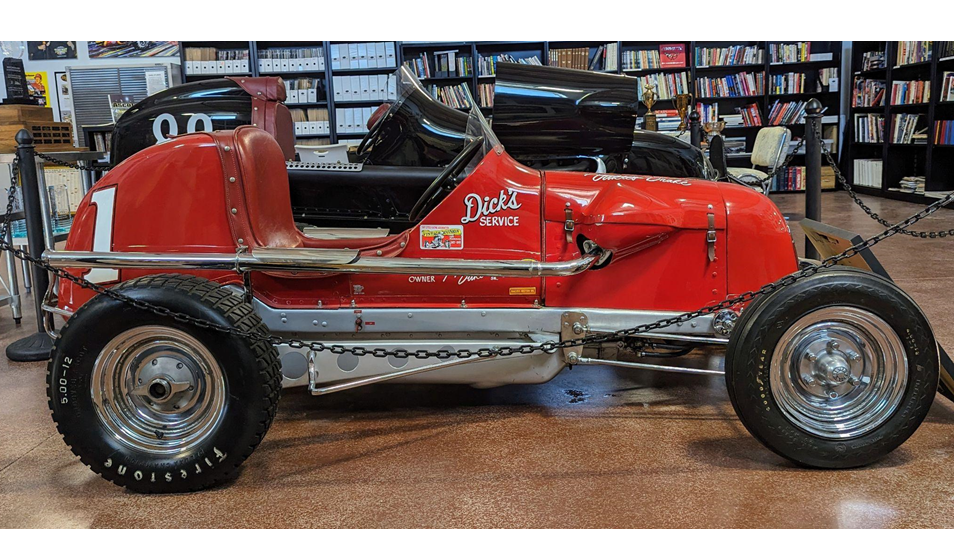
**Cover Photo By PTG Dudva – Own work, CC BY-SA 3.0, https://commons.wikimedia.org/w/index.php?curid=12016569
Notes
Jon Summers is the Motoring Historian. He was a company car thrashing technology sales rep that turned into a fairly inept sports bike rider. On his show he gets together with various co-hosts to talk about new and old cars, driving, motorbikes, motor racing, motoring travel.
- Sven the organizer (thanks)
- Remotive Labs
- A reminder that Software Defined Cars are the end of cars as Freedom
- Furious Driving’s review of a Geely
- The rot started with ABS and Traction Control
- Integration Hell and How To Avoid It
- The Mary Rose
- Virtual testing seems like not real testing
- The (seemingly well baked) Remotive product offering
- “A faster, smoother path to over the airwaves upgrades”
- Sir Nigel Gresley and The Mallard
- Western vs. Chinese engineering philosophy
- The Valeo Lidar preso
- LIDAR; a superior technology or pointless product differentiation for the German marques?
- Venture Capital in Silicon Valley
- Revolutionary software stumbling on the horns of corporate politics
Transcript
[00:00:00] John Summers is the motoring historian. He was a company car thrashing technology sales rep that turned into a fairly inept sports bike rider hailing from California. He collects cars and bikes built with plenty of cheap and fast and not much reliable. On his show, he gets together with various co-hosts to talk about new and old cars driving motorbikes, motor racing, and motoring travel.
Good day. Good morning, good afternoon. It is John Summers the motoring historian. Scalable digital twins for software defined vehicles. What does that even mean? You might say, and if you’ve not been listening to these ones that I’ve done that are about the software defined car or. AI State of the nation.
This is kind of A-T-L-D-R on those, or a bit [00:01:00] of a bolt on onto those. It’s the same speaker series that I’ve been to down there in, uh, in Silicon Valley, organized by the Society of Automotive Engineers and Dr. Beaker. So thank you again. Spend for inviting me the speaker, this time with these guys remote labs.
I mean, I’ll add the link and, and so on, so you can have a, have a little look at who they are and and what they do. But, but fundamentally, all of the speakers in this series have been people who, organizations, companies that are involved in, you know, the building blocks of the new software defined vehicle.
And I think the software defined vehicle is the end of. Cars as being something that’s about freedom, and it’s the beginning of being something which is as, uh, the McKinsey guy said in a, the software defined car presentation that I went to. It makes the car an edge of cloud device. It makes it like your phone.
It means that there’s some compute on your phone, you know, you can [00:02:00] download stuff to it. There’s some computing power on it, but most of your phone’s functionality comes via its connectivity to the cloud. And the wonderful engineering integrity that tomorrow’s cars are gonna have, that’s going to come from the cloud.
It’s not gonna come from the piece of hardware that’s sitting on your driveway. So if you think of it a hundred years ago, Fred and Orie, Dusenberg created the very best machine they could. And when you drove it off the forecourt, it was yours completely. It was yours. It was your domain. Now. It’s not, is it?
I mean, you might pay for it. You probably don’t even own it outright. You’re probably leasing it, but even if you do pay for it outright. What we’re now talking about is over the airwaves upgrades. You know, the, you are a light at night sleeping and you know, your Tesla gets an upgrade so it can recharge its batteries that much [00:03:00] faster.
This is the world of the 21st century. Oh yes. So it means that the car that you. Off the driveway in the morning is actually not the same as the one that you parked in the driveway the night before and you don’t have any idea what changes may have been made to it. So I don’t want to be all dystopian about over the airwaves upgrades, but fuck’s sake, just gimme the keys and let me go.
It’s about freedom. It’s about freedom. It’s not about a connected device. And I’m sorry, sir, I can’t, I’m sorry, sir. You’re gonna have to go through the touch screen and I’m, I’m sorry sir, are you sure you want to shut me down? Yes. I’m really, I’m sure I want to shut you down and flush you down the loo any car that makes me wanna communicate with it through the touch screen.
I know Tesla are big into this, right? I’ve not really experienced a car that’s got it. Of course, it’s much [00:04:00] cheaper if you can just have a button on a, in a piece of software than a button on a real dashboard, isn’t it? So that’s clearly the thinking behind it. Oh, the design’s so clean. The Tesla will tell me, I say balls to that.
It’s all about making it cheap. A furious driving. A YouTuber who I follow recently reviewed a Geely, which is being sold in Britain. Of course it’s being sold a great price, tons of content, but everything has to be run through the screen and, and I was amused that as he was trying to like toggle to turn off the annoying lane assist thing that was trying to put him into the hedge of the country road that he was driving along as he was.
Toggling to try and turn that off. The car was getting crossed with him because it detected his eyes weren’t on the road. I’m just like, you machines can all get in the fucking sea. You can all get in the sea, right? The car just needs to do what you tell it to like a hammer. You tell it go, it goes. I actually [00:05:00] think I wrote an article about this some years ago.
I actually think the cusp for this change was in the eighties and the nineties. So in other words, you know, my, uh, 95 Mustang with no a, b, s and no traction control free as a bird. Wrap around a lamppost if you want. It’s not gonna stop you. The oh one car that I have, although his characters completely the same, feels exactly the same to drive the A BS and the traction control mean that there is a committee of electronic nannies.
And I’ll attribute that to Jeremy Clarkson, that’s how he described it. A committee of electronic nannies that have to approve what you are doing before it happens. You push the throttle and the car’s like, Hmm, let me see, is there gravel on the road? Oh, you’ve got a live axle. What might No. Right. No, that’s not free.
But anyway, I didn’t sit down and do this recording [00:06:00] to get up on my fuck the software defined car soapbox. No, I didn’t do that at all. No. I hit the record button here so that we can all know exactly what stage we’re at. Blow by blow as driving is being de invented. So scalable digital twins for software defined vehicles.
What in the actual F does that mean? What it means is these guys remote labs, have a software product or a suite of software products which replicate in a virtual form components, which haven’t yet been developed. So let’s say that it’s your job to develop the suspension system for the new pulse star, whatever.
And in order for you to develop the suspension system, you have to know what the brakes look like. But the brake guys haven’t yet designed their brake rotor, so you can’t do any engineering around it. So [00:07:00] what this leads to in traditional car development. Is, you know, if it takes five years to develop the car, like halfway through year four, everyone finishes what they’re doing and then you have what they’re calling integration hell, where you guess that the brake rotor was gonna be one size and actually it’s a different size from that, and now you solution for the suspension doesn’t work properly, except it’s not.
Physical components that we are waiting on here, is it, it’s not, it’s not like, oh, we’re waiting for Brembo to cast us. The brakes. Like what are they gonna do us? Those new chuff D rotors? No, no, it’s not that. And that’s perhaps what was most depressing about this. Presentation, although it was the, although we talked about cars the whole time, we weren’t talking about actual cars and engineering.
We weren’t talking about the traditional stuff of automotive engineering. We were talking about software, and that’s really what we’re talking about here. That until the body control people have written [00:08:00] their software properly, the HVAC entertainment people can’t write their piece of, of software properly.
So remote if labs, what we are creating is, uh, virtual bits of infrastructure to allow testing. What this means is that testing can take place much sooner in the cycle. So they have this cool little graphic, which basically, you know, you look at the graphic and you understand completely what it is they’re doing, is that they’ve got all these like silos and all of the silos are working independently to go and create the final car.
And this leads to this integration. Hell, well now, because everyone can virtualize what each other are doing, the integration takes place at the beginning. So their integration is super smooth, and they had like a red, jagged graph and then a nice smooth green one. They were, they were Swedish by the way.
Um, two sort of middle-aged guys, but both of them. Looking [00:09:00] very valley on brand, I would say so, although my age older than than me. Um, they were t-shirts and, and they were trendy genie kind of trousers and, you know, flat canvassy kind of shoes. You know, these dudes, you know, you wouldn’t confuse this guy with the CEO with British Steel, you know what I mean?
These are not. The traditional people who you would see as suppliers to the automotive industry, although they do very much fit in with, you know, the way that valley people walk and talk, and valley people and all of the car makers have a presence in the valley. And all of these software defined car efforts are, are led by Valley people with this kind of Palo Alto.
Aesthetic. I wrote, what is being pitched here is integration testing the path to a product with over the airwaves. Upgrades is shorter and smoother. So I also wrote down that this isn’t car way development. It, it’s about. [00:10:00] Management of a software stack, the it’s ECMs, it’s GPUs, it’s the stuff that Nvidia hasn’t bought because you know the crypto miners have got it instead, kind of thing.
It’s those kind of products that we are needing to virtualize. It is not the sort of suspension and brake components, which I was thinking about. And in fact, at no point. In the presentation, did we talk about anything but might be considered traditional automotive engineering, and I really need to have you sort of stop.
And let that sink in to see how completely the car has become a mobile phone. Because even the suspension and the brakes, all of that shit can be controlled by the brain, right? So if you want the car to have better suspension, well it can just move the active ride, you know, different way. And that’s how the direction in in which we’re going here.
Not only are we not talking about those suspension and [00:11:00] break and those kind of traditional automotive components, not only are we not talking about them for examples, those things are rather like nuts and bolts. Now, the design of them, it hasn’t been perfected, but the design of them is sufficiently well understood that we know that if we want of a particular high quality, we have to pay for an extra kind of alloy and we have to.
Pay for it to be machined in a certain way, to have a nice flange on it and to have a hex head on it. Whereas if we don’t care, we could just rattle ’em out like they do carpentry nails where they’re just cast out of pig iron and they bend. So what? You just chuck it away and have another kind of thing.
So that’s a sea change that it’s the end of cars. As we’ve known them in the 20th century, right? It’s the end of there actually being something to talk about [00:12:00] around the business of motivating the card down the road and allowing it to negotiate bumps better or be easier to repair or all, all of that stuff.
None of that was remotely considered by these guys. In this presentation, it’s all about integration of different software products. So of course what it means is that. Testing in future is gonna involve a blend of actual components and virtual components, and I’ve been unable to shake this thought at the, since the, in the day since I went to the presentation that the morning before I entered the presentation, I was chatting with somebody about the Mary Rose.
If you are English, you’ll know what the Mary Rose is. If you’re not, you won’t. It was King Henry VII’s, top quality warship. You know, it was the weapon of mass destruction of the day, and as with so [00:13:00] many of things, it had a Titanic like sinking experience because it’s made of wood, so it rotted away, right?
Anyway. Docks in Southampton. Portsmouth got a new display and the historian that I was chatting to had recently been to it, and he talked about how it was awesome because what they’d done was they’d taken things that were really there, like pewter vases, and then put black plastic where the handle had been.
If the handle had gone broken off, they put black plastic on there so you could see what was original. And you could see what they modeled so that you could see what this thing looked like actually in context rather than it just being a crappy piece of meaningless broken pottery. As students used to say to me when we walked around the forum, what’s this building site?
Yeah, exactly. What’s this construction zone? That’s what the forum looks like because it’s just a piece of broken pottery. They’ve [00:14:00] not thought to contextualize it within its place, not just on a table, not just in a vase, on a table, but on the Merry rose and as part of Henry vii. It’s warship and not just as part of Henry VII’s warship, but as part of everything that Henry VIII himself symbolized as, you know, the end of the wars of the Roses and what he symbolizes as a, you know, historical figure today.
Right? All of those things can come from that one piece of pottery to me. We’re in a place where the testing is gonna take place on the fragment of vials. That’s the actual thing that each siloed engineering team is working on and their testing environment is going to be completely virtual. This boggles the mind a little bit, right?
’cause the whole thing about a test is the, the way things work in theory and the way things work in practice is completely different. And now what we’re [00:15:00] having is a system of virtual testing. So we’re gonna test in a not real world environment, how can that be testing? The whole thing about testing is it takes place in the, in the real world.
Well, you say, well, uh, the founder of remote Labs would probably have said, well, this, the, the integration testing would still take place at, at the end. We just allow you to speed up the testing. Process there. So integration testing from day one. You know, I talked about the silos and I talked about the information flowing from the silos straight away rather than, you know, integration testing out of the box, a full integration testing system.
So that now we’re getting to the stage of, yeah, yeah. All right. I know that, you know, you’re gonna fill me up with burger and fries, but when I’m actually at the counter ordering, how does, how does that work? What does the Happy Meal look like? How much is the big back and fries versus the quarter pound?
So that all seemed to be in [00:16:00] comparison to other software. Define vehicle AI kind of companies. This all seemed more baked, to be honest. Um, I’ve not been to their website and looked, they only talked about having one client who seemed to be polestar based upon the sample names in, in their presentation.
But it does seem like if you approach them. You wouldn’t be a prototype site for them. If you approach them and engage them, they have something which is out of the box. And that brings me back to that phrase that I’ve used a couple of times before. But I find it helpful to think with these kind of mnemonics to get my head around what, what’s really happening here.
The path to a product with over the airwaves upgrades is shorter and smoother. That’s what they’re doing. That’s what they’re trying to do. And the fact that there are so many automotive makers who want that, who that’s a compelling problem to be solved for, or the fact that there’s anybody out there that [00:17:00] these guys feel they’re comfortable pitching that message.
That is what’s interesting. You know, if there’s a guy outside a stadium selling hot dogs, he might not be selling any hot dogs, but the fact that he’s there says something about the fact that there might be demand. That’s what. So wrote here, the traditional automotive engineering is going the way of steam locomotive engineering.
I have a biography of Sir Nigel Gresley up on my bookshelf there. And you know, in the first half of the 20th century he was like an Adrian Newey kind of a figure in terms of steam engine design and engineering. Nobody’s fucking heard of him now have they? Was my thought. You know, in the Mallard, the steam engine that did 120 miles an hour, I mean.
It’s an awesome thing, but it’s really right back there with the spinning Jenny, isn’t it? And it, it was, even when I was a boy growing up, you know, in the seventies and the eighties, you know, the mallard and steam power, it was something of the past. [00:18:00] It was already historicized. Right. And that’s why I’m using that, that example because you know, well it’s like a Lamar winning car, isn’t it?
No. Or a Formula One car no longer does it win it. No sooner does it win its last race, then it immediately becomes a museum piece and the technology moves on and, and I suppose I hadn’t anticipated as part of this software defined car revolution that we were gonna lose. People like Adrian Newey, there were gonna be no Adrian Newey in the future because those kind of brains just weren’t gonna be interested in designing cars because we’ve done that just like the zeitgeist has moved on.
And a brilliant brain like son Nigel Gresley would not have been involved in. I hope I’ve made my point there.
One interesting thing that he did say, and, and this is an interesting facet of these presentations, is that quite often the most interesting part of the evening are the question, but quite [00:19:00] often I would say for every one question that’s really compelling and leads to a pearl of wisdom that makes you really glad that you came, that pearl alone would’ve been worth the evening out of the house.
Kind of that’s offset by the fact that. Uh, maybe it’s the engineering audience, although I find the same happens with historians and social scientists, but somebody takes you down this boring rat hole and I just chewed out and I can find it hard to tune back in. Even if the presenter’s answer is, is a compelling one.
But one point that he made was the Westerners like bespoke performance solutions, whereas. Chinese engineers will make do with. Off the shelf components and we’ll integrate that. And I think that’s a really interesting philosophy. Now I am replaying it. I wonder if, if you listen to the presentation that I did with lio that was [00:20:00] about the history of Leadar or looked at, you know, where we are with our development or where we were, you know, 18 months ago or whenever I, whenever I went to that, I was struck there by how.
The Leadar developers were all in bed with one particular German company, and it made me wonder how political Tesla’s public rejection of Leadar was and how the German’s embrace of Leadar was perhaps a, you know, less about the technology and more as desperate attempt to give themselves some differentiation from this aggressive new player in the market.
It’s a very cynical thought, but now I’ve said it out loud again. Feel that it’s really not unlikely that that’s the case, especially given that, you know, German autonomous cars are meant to operate at 150 miles an hour. You know, a much higher level of veracity. If that’s the right word. It’s not, they basically have to have, be high quality, just like an A MG Benz is [00:21:00] designed to do 150 miles an hour on the autobar with five people and their luggage in it.
Other cars aren’t designed to that kind of standard. The same thing’s going on here, I think perhaps with Leadar design, so perhaps that’s why Westerners like. Bespoke performance solutions and the Chinese are, you know, more ready to make do, maybe it’s not a cultural thing, maybe it’s a price point and marketing thing.
Maybe Stellantis are gonna be doing something which is more, you know, off the shelf and integrate. Although interestingly, I do remember the Val guy saying that Stellantis. Wanted to take all of their, if you like, the firmware, remember if you listed their Leadar presentation, they were like, some people just want to take the Leadar device.
Other people want to take the Leadar device, the hardware, but they also want to take our. Kind of bespoke software. Our, our like [00:22:00] firmware almost, or our interpreter. In other words, we got some stuff programmed in that. Let you say like, if it’s got small and four legs, it’s a dog. If it’s large and four legs, it’s a cow.
If it’s, you know, got two wheels, it’s a bicycle. So in other words, your device, your ai, you know, your ECM doesn’t need to have the horsepower because we are already doing some pre interpretation for it. If that makes sense. I’m not sure how clear my point here is is, but I suppose what I’m trying to say is that traditionally the Germans used to charge more for a premium product because it drove better, right?
It, it was better to sit in, it went around corners better, accelerated faster. It had a high top speed. You know, when you were on the freeway it was quieter. You know, there were those kind of very ta. There were those kind of. Of reasons and the whole, the whole world of car magazines and journalism and what was a good car and what was a bad car, and what impressed people in the [00:23:00] company car park and all of that stuff was all wrapped up with that kind of performance.
And I, I wonder if. The Germans aren’t trying to do the same thing with their techno functionality. I mean, BMW definitely seem to be, don’t they? Perhaps, uh, perhaps it’s a statement of the obvious. Perhaps that’s what they are trying to do, and perhaps the motive guy by saying Westerners like bespoke performance solutions and, and the Chinese are more happy to make, do with off the shelf solutions and integrate.
Perhaps that’s just a different way of, of saying that.
One question was about what actually is spat out of a simulation? So what kind of rapport was it? I can’t remember what the answer was, but I, I just thought that illustrates that kind of a, I’m at the counter, I’ve ordered a burger and fries. When the burger and fries come, what do they look like? You know?
Am I getting a tray? [00:24:00] Is it wrapped? Am I gonna need a napkin? Am I, you know, that’s the stage that the audience are at with this kind of technology. They’re not blown away by the concept of this. They’re like, no, no. I, I, I get the burger and fries. I get the fast food. You know, I get that. I, I’m interested in whether or not there’s gerkin and is the coffee free or not?
That’s where the audience were thinking. So I think the final point that came out of the questioning was from like an old coup at the front. And you’ve gotta believe when you go to one of these events in Silicon Valley, some old coup wearing a hoodie at the front. I mean, he could be a partner, uh, a Silicon Valley VC firm.
’cause the VC guys, if, if, if you don’t know the way Silicon Valley’s laid out, if you’ve come from like the city, London, or you know, any kind of a European financial center, it’s. Kind of weird. Firstly, because the valley’s all [00:25:00] like low rise. And secondly, when you realize that not only is Stanford the model for all the tech campuses, so all the tech campuses feel like Stanford’s campus, which is a bit weird because it means that all of these people who like left Stanford and went to Google or left Stanford and went to Apple, they went from one place where they worked with a bunch of people who were exactly like them.
Riding round on bikes at a really nice campus to another place that looked exactly like that. And the only difference was how much you got. I mean, Berkeley’s not like that. Berkeley felt like Leeds. It felt like a gritty educational institution that had been there for a hundred years. Stanford does not feel that way at all, and one of the weirdnesses of Stanford is the road connecting it to the freeway.
Is venture capital central or the venture capital firms that you’ve heard of in association with funding, either early stage startups or late stage ones? They’re all right there. [00:26:00] On that drag, it’s a bit like the first time you work the city of London and you realize that you really can do one meeting and it really is just gonna be five minutes round the corner to another meeting.
So you can literally book meetings every hour and not be laid. The question this older bloke in a hoodie asked was, um, around what actually is the main. I can’t remember how he framed it, but basically he was like, what’s the biggest cock block to getting adopt? And they said political resistance within the organization.
And he said, you know, because it’s such a revolutionary approach, but if you just stop and think about that, that is a total showstopper, isn’t it? Because at the moment if the head of silo A, the head of Silo B and the head of Silo C, they might have gripes with each other. But they each have their own process, which they’ve been following and has been [00:27:00] working just fine.
And when you rock up and say, yeah, now you guys are gonna have to share from the beginning. So that means that right from the start, I’m trying to design my brake rotor. But I’ve gotta have meetings with you so that I get some idea of what your suspension looks like so that I can already begin integration testing.
I mean, it just feels like, you know, we, we had a process that was working and now you’ve come along and changed it all. And I think the, that for me was a reminder of what it’s like to actually sell these kind of software products. Is that. In the kind of safe environment of that kind of presentation, the concept seems awesome, revolutionary compelling, but when you actually meet the reality of those three silos now, or having to work together and work in a completely different way, I feel like whatever efficiencies you might gain could easily [00:28:00] be lost in like the re-imagining of the whole process.
And certainly there would be significant productivity losses, you know, as ever, whether there is in these kind of software products, in the actual integration and training and setup and persuading people to use itness of it all. So to conclude, these remote guys seemed to have a product which was highly baked, and it definitely seemed to have a need, which.
Was developed well based upon the questions that were asked. You know, the people asking questions, they weren’t being like, well, is it even gonna fill me up? They were asking questions like, I, I want fries with that. When’s the McFlurry coming? You know, those were the kind of questions that the audience were asking, but.
You’ve still got this like hugely disruptive kind of process. So you know, for me, if I put my [00:29:00] software sales guy hat on for the next interview, I would’ve really wanted to talk to some customers and I would’ve really wanted a warm feel that they weren’t just in bed with one company. Because that was my worry that the, and I, I should go to their website and have a look around, and I might be misleading you with this, but you know, you don’t want a situation where they’re only in bed with one company and they’re completely in lockstep with what they’re doing.
So you, as a sales person, you can’t really sell the product to anybody else because it’s like left handed scissors, you know, only works for 10% of the population. Thank you. Drive through.
This episode has been brought to you by Grand Touring Motorsports as part of our Motoring Podcast network. For more episodes like this, tune in each week for more exciting and educational content from organizations like The Exotic Car [00:30:00] Marketplace, the Motoring Historian, break Fixx, and many others. If you’d like to support Grand Touring Motor Sports and the Motoring Podcast Network, sign up for one of our many sponsorship tiers at www.patreon.com/gt Motorsports.
Please note that the content, opinions and materials presented and expressed in this episode are those of its creator, and this episode has been published with their consent. If you have any inquiries about this program, please contact the creators of this episode via email or social media as mentioned in the episode.
Highlights
Skip ahead if you must… Here’s the highlights from this episode you might be most interested in and their corresponding time stamps.
- 00:00 The Evolution of Software-Defined Vehicles
- 02:47 The Impact of Over-the-Air Upgrades
- 06:25 The Shift from Traditional to Virtual Testing
- 19:30 Cultural Differences in Automotive Engineering
- 28:19 Conclusion and Final Thoughts

Enjoy more Motoring Historian Podcast Episodes!
The Motoring Historian is produced and sponsored by The Motoring Podcast Network