

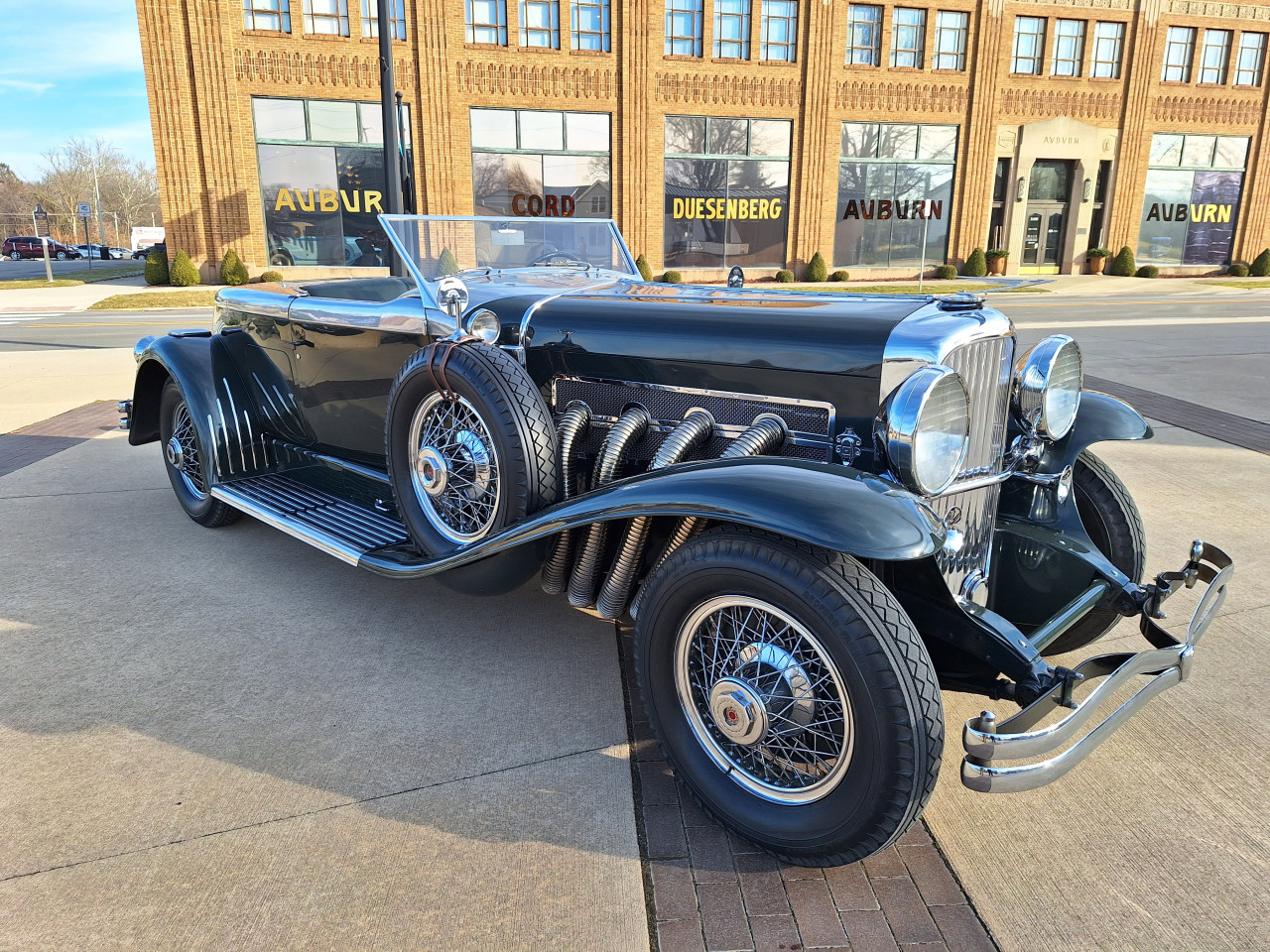
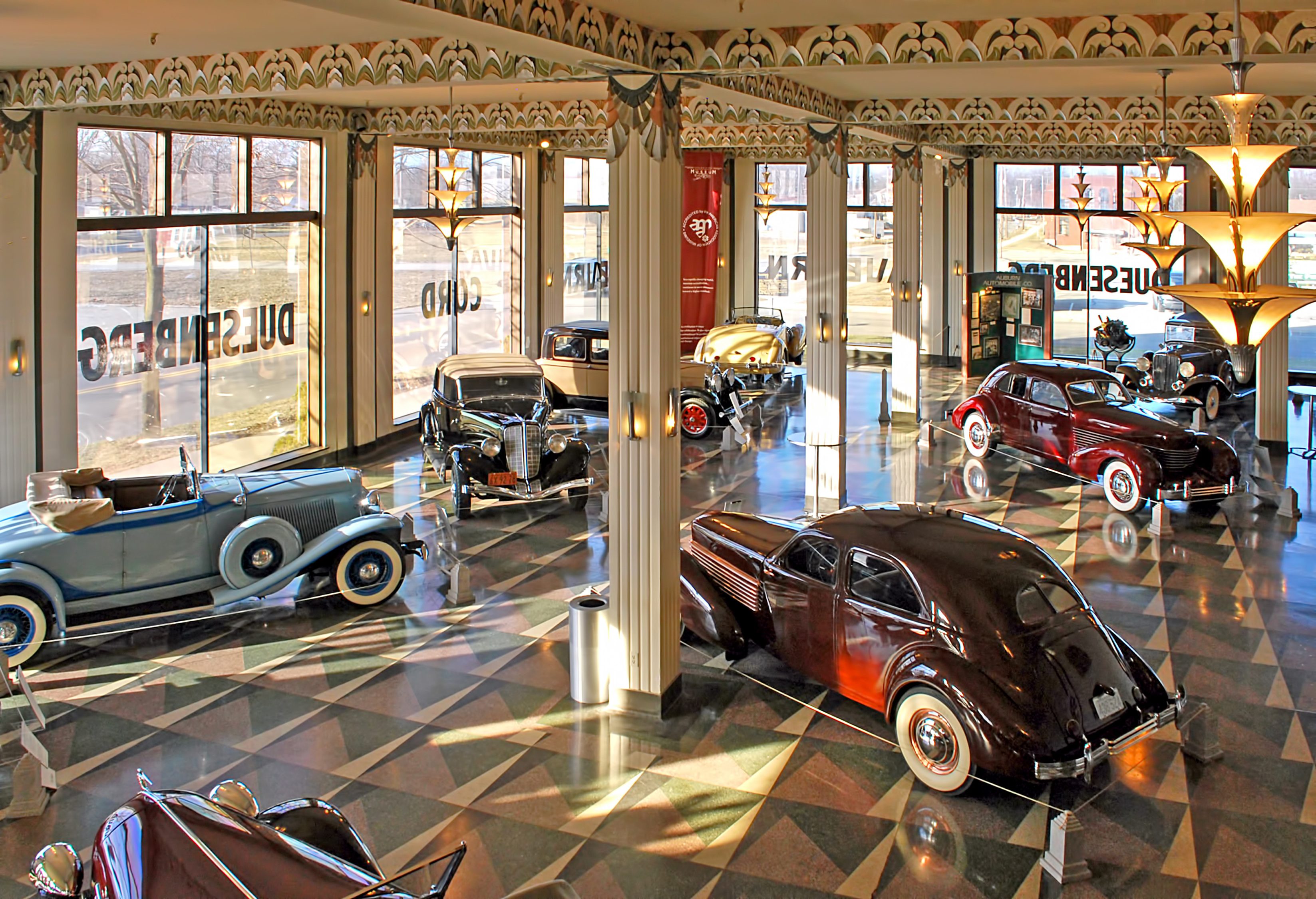
The Motoring Historian, Jon Summers, drives between Fort Wayne and Indianapolis on a museum tour, focusing on the Auburn Cord Duesenberg Museum housed in the remaining Auburn factory. He frames museums as “a bunch of stuff” versus curated stories, then seeks the Duesenberg creation myth, especially the engineering behind the Model J. He recounts Duesenberg history: self-taught brothers Fred and Augie from bicycles and racing; the Model A’s four-wheel hydraulic brakes and inline eight; WWI aero-engine work including a V16; and E.L. Cord buying the company, keeping Fred as chief engineer, and commissioning the Model J, with styling contributions from Leaming. He praises the car quantity, Auburn evolution exhibits, hood ornaments, and Buehrig clay-modeling offices, but criticizes crowded displays, awkward mannequins, and intrusive volunteer “gallery hosting,” comparing lessons to the Studebaker Museum and Indiana’s component-based auto industry.
Notes
Jon Summers is the Motoring Historian. He was a company car thrashing technology sales rep that turned into a fairly inept sports bike rider. On his show he gets together with various co-hosts to talk about new and old cars, driving, motorbikes, motor racing, motoring travel.
- A comparison with Bentley: 200hp vs 265hp
- The Museum is the showroom where dealers used to see new models before launch
- Amazing Hood Ornaments at the ACD
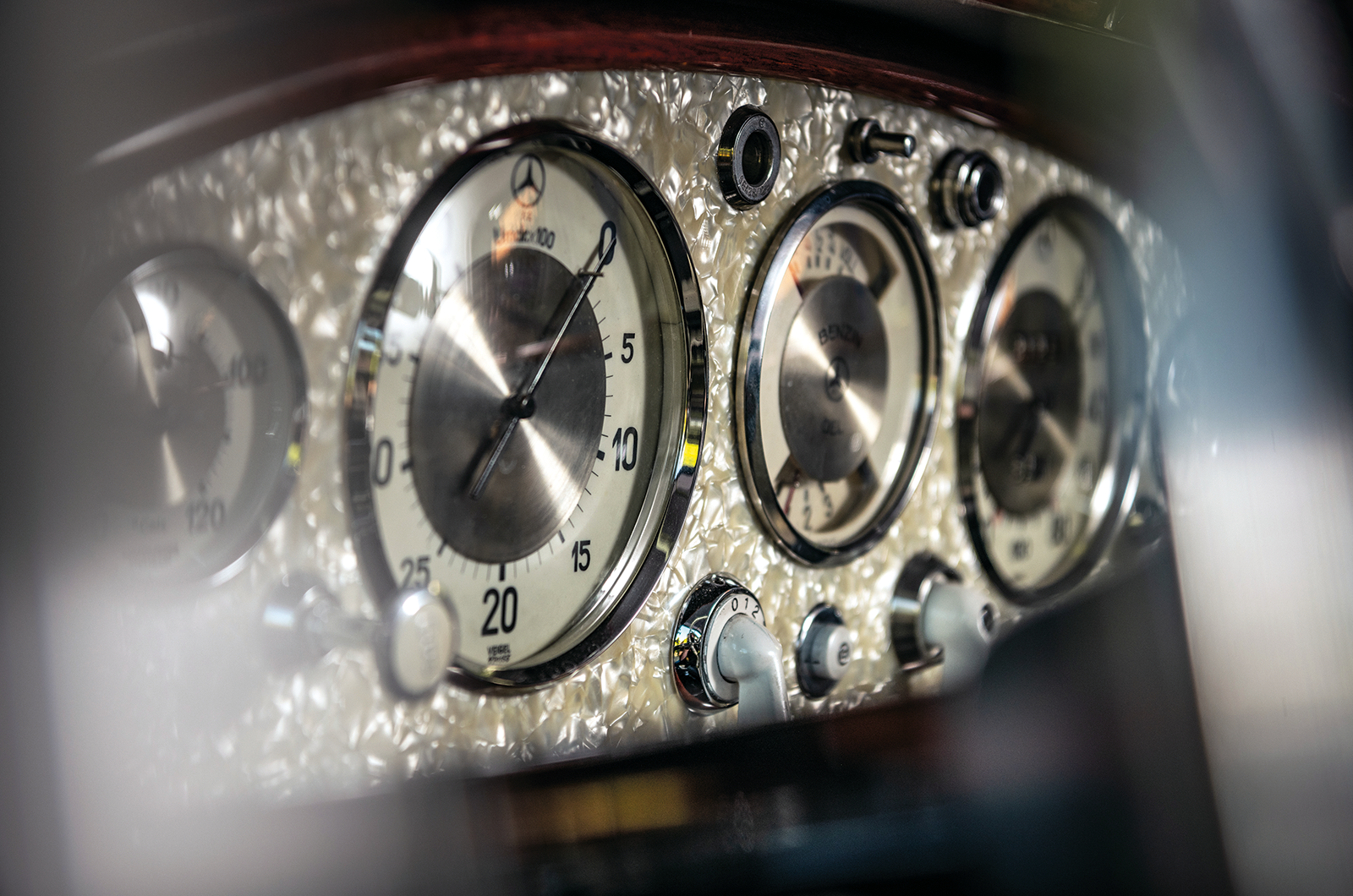
- Mercedes 540k Mother of Pearl dashboard
- The Gary Cooper Duesenberg SSJ
- Auburn and Studebaker, both wagon/cart makers before cars
- Gordon Buehrig”s Design Office
- Fred and Augie
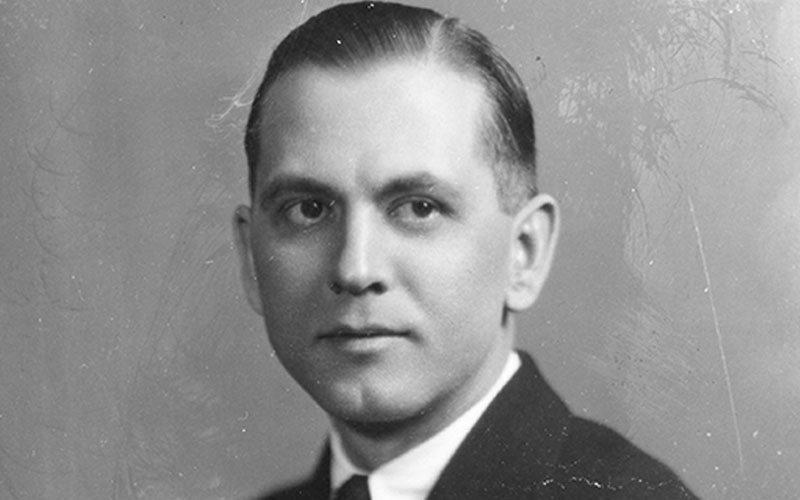
- E.L. Cord
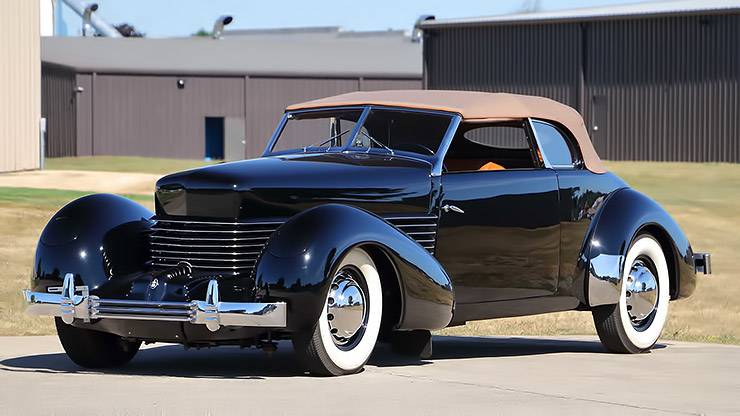
- Coffin Nose Cord
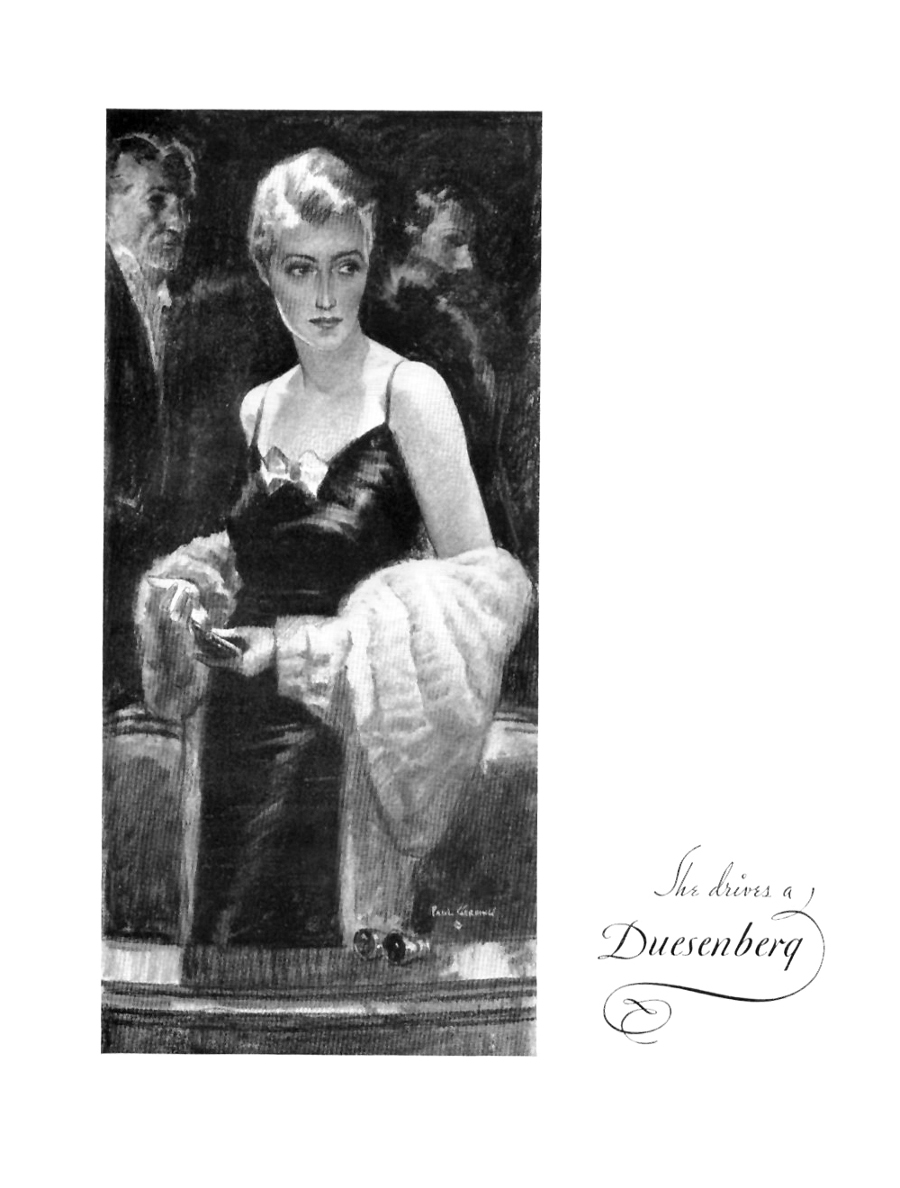
- Duesenberg advertising
- Alan Leamy, styled the Model J nose while Gordon Buerhrig dessigned the rest of the Model J
- Use of Manequins at the ACD and Blackhawk – a good idea badly executed
- Aggressive Gallery Hosting – most off-putting
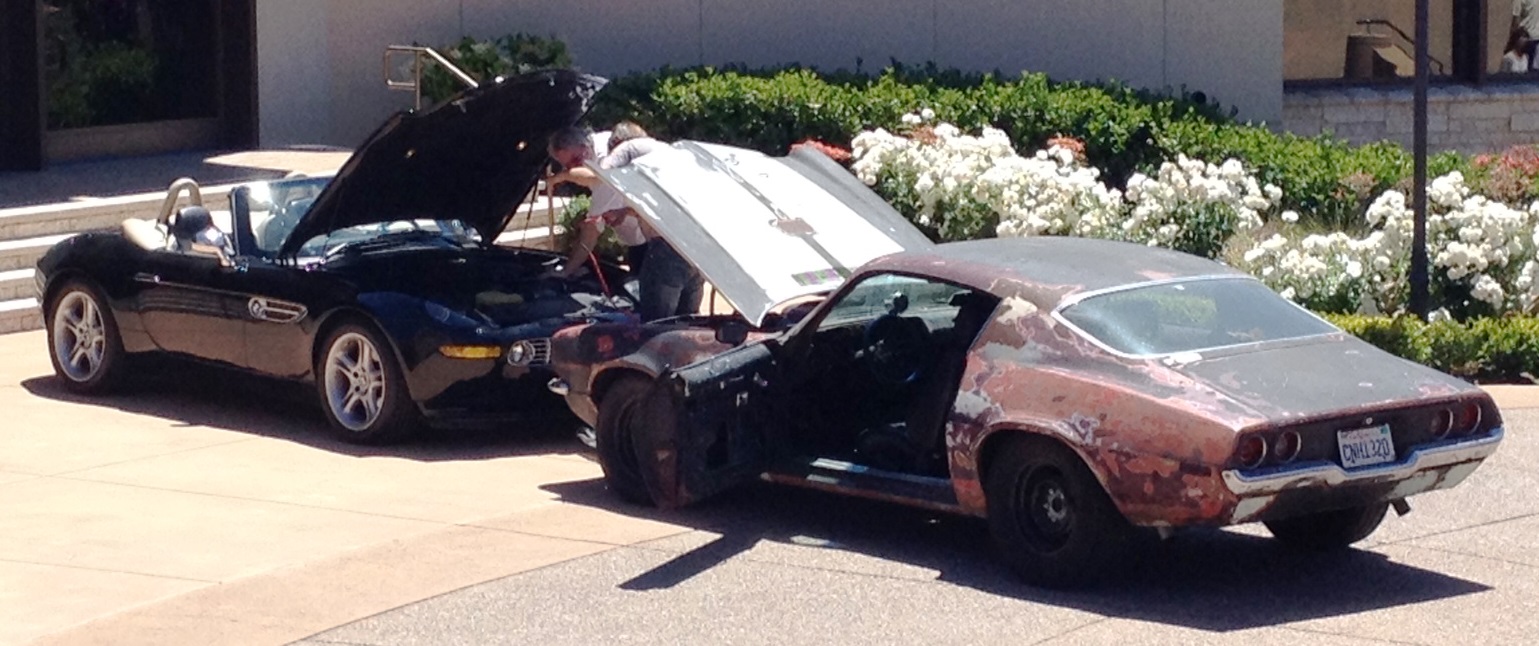
- Beater Camaro Jump starting coffin-nosed Cord
- Blackhawk Docent Fred Kern
- An aside on Audi V10s and V8s
- Fred being a key influencer in BMW pairing clutch pedals and the V10 for the US market
- Fred’s stick M6 V10, the first car imported to the USA
- Comparison with Studebaker
- The Studebaker Creation Myth – the big beard sells wheelbarrows in the gold rush
- A digression on beard fashions
- What Children spot in the Studebaker Museum
- Non-car people love their Toyotas
- Why Studebaker Failed According to J
- Car manufacturing in Indiana, especially Component Manufacture
- Cole, a component maker yet a legit Cadillac competitor built with the philosophy of Geroge Brough – buy the best components; assemble them to the highest standard
- The Cole “What If?” story
- Dynaflow vs. Hydramatic – competing automatic transmission technologies under the one roof of GM
- The tension of the game of baseball was missing from the Baseball Hall of Fame; equally, the vibrancy of the twenties Gatsby Duesenberg Art Deco era was missing from the ACD
- The Blackhawk Museum’s raised dias’
- Duesenberg Model X and Y
- Home movies of E. L. Cord
- Storytelling in a museum: is less more? One car, not 20 parked close to each other?
- The other museum on the ACD site
- Mercedes Buying Brooklands
- The Exterior of the Building is Awesome
- A contradictory parting thought: if the story was cleaned up, the items ruthlessly curated, it would be a clearer, better museum, but J would find it lacking in depth ;-P
Transcript
[00:00:00] John Summers is the motoring historian. He was a company car thrashing technology sales rep that turned into a fairly inept sports bike rider. Hailing from California, he collects cars and bikes built with plenty of cheap and fast and not much reliable. On his show, he gets together with various co-hosts to talk about new and old cars, driving, motorbikes, motor racing, and motoring travel
Good day, good morning, good afternoon. It is John Summers, the motoring historian. I’m on the road and driving between, uh, Fort Wayne, Indiana, and Indianapolis, Indiana, doing a bit of a museum tour. Probably the reason that you tuned in to this is that you’re interested in the Auburn, Cord and Duesenberg
Museum since that’s what I said I was gonna talk about in the title of this [00:01:00] video. Now, longtime listeners will know that the title doesn’t usually stray me. I’m trying to actually deliver people something meaningful. Let’s sort of begin in the most obvious place here. What is a museum? It can be one of two things, right?
It can either be a bunch of stuff, some of it interesting, some of it not, varying to diff- people, different cultures, different times, a bunch of stuff. Or it can be stories that are crafted to make sure that the people visiting the space, museum, art gallery, whatever it is, that is crafted to make it accessible for them So for it to be accessible, it has to be something that resonates in you.
So if you never enjoyed riding fast on a horse or skiing fast, you’re gonna sort of struggle perhaps to, to understand why people might find motorcycle racing [00:02:00] exciting, that kind of thing. So the place to begin with this is that, you know, most museums are a bunch of stuff. They’re not the stories. So the stories are sort of fighting to get out of the giant pile of stuff.
Now, I had this thought at the Baseball Hall of Fame, which I recently visited, because I don’t really care about baseball. But I was very interested to see how the story was told and to see how the people around me received the story. That was fascinating to me, especially my son and father-in-law, who are baseball fans, right?
That was fascinating. The Auburn Cord Duesenberg
Museum is in what little is left of the Auburn factory. Duesenberg became a part of the empire that E.L. Cord put together, and E.L. Cord is really the important sort of mover and shaker. [00:03:00] He bought Duesenberg fundamentally, and then kept the important guy, Fred Duesenberg, on as chief engineer. Not that the brother wasn’t important.
We’ll talk about that in a minute, ’cause this is a point about really Auburn, Cord, and Duesenberg for me is I wanted to understand the Duesenberg creation myth. That’s the brand that everyone’s heard of, Auburn and Cord, like… I know if you know cars, they’re like cool, American, and front-wheel drive, and elongated, and Gordon Buehrig, and I, I, I know.
But if you are not steeped in this space, if you are like my producer, you think everything with… doesn’t have a headlight in the fender and wasn’t made after 1945, you’d call everything like that a chitty bang bang car. This is the 101 on Duesenberg for the people who look at everything that was made before the war as just a chitty bang bang car.
[00:04:00] So to contextualize Duesenberg, Bentley won Le Mans repeatedly, beating not just American marks, but other European, you know, French, Italian, German marks as well. And they did this in a car which, y- you know, increasing amounts of horsepower through the ’20s, but never more than 200, even in the Speed Six form.
The Blowers perhaps, but, you know, they broke, didn’t they? You didn’t win Le Mans with a Blower Bentley. You won it with a Speed Six. My point is that if you compare those power figures with the power figures of a supercharged Duesenberg 265, you can see that the Duesenberg was in a completely different league.
It was a completely different league to the cars that were winning Le Mans. And of course, Duesenberg had already won at Le Mans. They did in 1921 when it was a Grand Prix. So [00:05:00] I’m arriving at the museum wanting to understand more about Fred and Augie and wanting to see cool stuff related to them, wanting to get a sense of them.
And in that sense, you know, I think the museum is very, very successful.
I wanted to come to this museum because it has… When you see photographs of it, it is the showroom that the company used to present new models to its dealers. So it’s a little bit like Fred Simeone’s place in Philadelphia in terms of a sort of period correct scene, but in a museum setting that has a sort of musty, fusty kind of feel, which very much puts it in the category of a bunch of old stuff rather than [00:06:00] stories which are carefully curated and where the story is told clearly through compelling choices of objects.
So you know I love a degre- a digression. I’m gonna digress on the back of piece of cardboard agenda. I’m gonna digress on that by talking about hood ornaments. They have the most spectacular collection of hood ornaments I’ve ever seen. I had to tear myself away from the hood ornaments and get back on the clock of trying to understand Duesenberg and what it was that created that awesome 265 horsepower thing called the Model J, which is the ultimate chitty bang bang.
Now, I’m gonna use as a cover shot a Duesenberg Model J. The important thing about the styling is that the grill, the height of the grill, it goes straight back to the cowl, but the cowl is higher than the height of the door. So it gives [00:07:00] this sort of engine and grill, and the whole car seems to be leaping at you down the road because of that drop away just at the bottom of the windshield, just at the bottom of the scuttle.
I hope you can see what I’m talking about. And of course, this is an era when you’re buying the car as a rolling chassis and then commissioning your own coach builder to design the car. So this is taste can be awesome or people’s taste can be absolutely terrible. Most people did, you know, boring banker kind of vehicles.
You know, bankers bought cars that, you know, they wanted to be able to wear their hats in. But, you know, there were a few movie stars, people like Miles Collier recently, well, I say recently, some years ago now, sold a Gary Cooper Duesenberg. This is like a two-seat roadster. This is all the engine with as little bodywork as possible.
So those kind of cars are few and far between, ones that are built to [00:08:00] that kind of ruthless specification. And a lot of cars have had different bodies on them over the years. But the, the important thing to think about here is that the Duesenberg is the pinnacle interwar American marque, and I would go so far as to say the pinnacle American marque Why?
Well, because these chitty bang bang cars were made with a different kind of workmanship. When you sit in a Mercedes now, the technology is impressive. When you sat in a Mercedes in the 1930s, the dashboard was made of mother of pearl. If you don’t know what I’m… I’m… I’ll put a link to a Mercedes 540K dashboard with a mother of pearl inlay on it.
This kind of detail, beauty, and craftsmanship abounded in these cars that were made between the wars. So this is why with these kind of cars, you’ll hear them talked about in terms of the car, Duesenberg, the model, SJ, but then [00:09:00] it’ll be by Murphy or by Van Buren or some weird name like that, that even as a car guy sometimes you haven’t heard of.
And that’s because it was some dude in a shed with hammer and nails making the body, just like they made carts. And this is quite interesting, right? Because that’s how Auburn started out. There was some Elsdre or Exdre or whatever. They were cart makers. They had like a production line of carts, and then they started doing cars as well.
And that’s interesting to me because Studebaker did exactly the same thing. And actually, the Studebaker Museum has a similar kind of feel, and Fort Wayne has a similar kind of feel to Auburn, Indiana. I mean, I guess they’re both Indiana towns. And we’ll talk a little bit about the Studebaker Museum in a moment there.
And you’ll probably see on the Motorand Podcast Network, there’s a bunch of other content from stuff that we as, as a team did at the Studebaker Museum. But look, right, for the [00:10:00] preamble, I’ve talked, haven’t I, a lot, and I’ve not really said whether or not the museum was any good. Is the museum any good?
Yeah. Yeah, it really is. If you wanna see a lot of cars, there’s a lot of cars. In lots of ways, it’s the way that the Black Hawk was years ago. So there are lots of Olympian-era cars, cars of the ’20s and ’30s, lots of gleaming chrome, lots of perfect paint, lots of opportunity to compare different vintage vehicle body styles.
There’s also a really good story telling the evolution of Auburn through the brass era Nice lighting. They did something that the Blackhawk never wanted us to do. So the whole thing with the Blackhawk is this is very much museums according to the philosophy of the 1980s. And this is the black marble, and the cars set off up against the black marble with spotlighting.
So, uh, ACD [00:11:00] has a couple of rooms that are really full of these kind of very glossy, shiny cars. I would say that’s not the element of the museum that I enjoyed the most. The element of the museum that I enjoyed the most is there’s a room of Buehrig’s clay modeling. Now, I’m not the biggest Gordon Buehrig styling fan.
I know it’s sacrilegious to say that, as for many people, but I’m, I’m just not the biggest fan of his work. But the offices in which these clay models were made and, and how that was done, that had a wonderful kind of old world feel. There’s a hallway where you can walk and look at all the different advertisements, and it feels like you’re in the office as it was in the 1930s.
That part of the museum I was really, really taken with. So I had that experience where I was, like, overwhelmed by the cars on the floor. And I see more elegance in the artwork. I love reading the stories of the [00:12:00] people. I love understanding what made the thing compelling early on. So the Duesenberg Model A was the first car to have four-wheel hydraulic brakes, and it had an inline eight.
It was the first car to have an inline eight. I mean, if you would just read the specifications, and if you were a car guy who knew anything, you’d order it. If you had the money, obviously. Yeah, I mean, it goes without saying you’d have to have… you’d have to have money, right? I think that just bears repeating.
The Duesenberg Model A was the first production car with four-wheel hydraulic brakes. Up to that time, they weren’t hydraulic, or they were only on the front axle or the back axle. And it was the first series production car to have an inline eight-cylinder engine. So this is a configuration of engine. 20 years later, Mercedes are gonna be able to supercharge to make more horsepower than any Formula [00:13:00] 1 car until the Renault turbo cars of the 1970s.
So we can see that Fred and Augie, with the Model A in 1921, they were a long way ahead. They were a long way ahead in terms of what can we do to make the most power, and they were a long way ahead in terms of what do we actually need to do to make the car drivable, the brakes.
The showroom setting, impressive, but too many cars. Information, as Tony Stewart, the NASCAR driver once said, “If you wanna hide something from me, put it in a book.” I learned a lot from the plinth. I, uh, everything I’m gonna tell you I learned from the plinth. I didn’t read anything else. But here, is the story really- Landing.
Is the story really landing? Are audience members actually understanding what was so special and compelling [00:14:00] and obvious to contemporaries about Duesenberg? Okay, here’s what I’m gonna say. I listened to the conversations that two other couples had who were people who were going round the museum. Like many people in art galleries, they knew they were looking at art, but they didn’t really get the difference between Picasso and Rembrandt and high school art.
They weren’t quite there yet. The dude had ridden there on a Harley with his wife, girlfriend, whatever. He had not grasped how the whole thing that he, everyone loves about Harleys is they’re so brutal machines. I mean, he missed… I mean, I don’t know, maybe he was there for a minute. ‘Cause like me, I think the thing I saw him look at the longest was the V16 aero engine that the government had the Duesenberg brothers design in the war as part of a war contract, even though at the time there was no [00:15:00] plane big enough for it to fit.
And in fact, there never was a plane big enough to fit, and the engine just sits there as a sort of bizarre white elephant. But yeah, that was my favorite exhibit. It had some whizzbang clever tech on it that aided manufacturing and- This is the First World War, just to be clear. This V16 was designed as an aero engine in the First World War.
So I should say at this point that Fred and Augie, the creators of the Duesenberg legend, are self-taught. And there’s one picture, and I may use this as a thumbnail instead of the SJ. The two of them looking at the camera, and the caption underneath says something about them looking more like farm boys than like the world’s leading automotive engineers, and they kind of do.
So like the Studebakers, German extraction, settled here, family moved around a bit, didn’t quite find the right [00:16:00] trade initially, but in time settled into, like so many of the really early fellow motoring pioneers, guys like Jarrett and S.F. Edge in, in England or, you know, the French fellows as well. It started on bicycles, but the difference between a bicycle and a bicycle with an engine is so small that really that’s sort of where it, it originally came from.
And that, of course, is why motorsport, partly why motorsport is welded into the very DNA of motoring, was that the racing was there before and, and Fred and Augie were all about the racing on bicycles first, and they had a bicycle shop in their 20s. So the next thing to think about is E.L. Cord and his connection, because fundamentally, the car I spoke about, the straight A hydraulic brake guy, he didn’t sell very well.
He was the Model A. He didn’t sell very well and then the company went into receivership in the mid-’20s, and the [00:17:00] buyer was this guy, E.L. Cord. Now, I’d heard of him before, and as a car guy, you know the name ’cause of, like, the coffin-nosed Cords. But he basically just one of these people who just had cars and racing and business just coursing through his veins.
As a teenager, he was buying Model T Fords that had been damaged, throwing away the body, tuning them or hot-rodding them a little, and then flipping them off. And that had evolved into selling, I think it was a brand called Mason, and then he’d done really successfully with Mason. There was another brand that he was asked to do, like Auburn.
That was how he came to do it. Auburn was struggling. Auburn had done like the wagons. They’d pivoted to cars. They’d been pretty successful. They were struggling a bit in the early ’20s. Everyone was. They hired him, and they were impressed because he didn’t want a salary or didn’t want a full salary. He was [00:18:00] happy to, like, work for, you know, a share of the success, and he turned Auburn around.
You think of it, he turns Auburn around, then he has these ambitions to grow what he’s doing, similar to the way that Billy Durant grew General Motors. So when he has the opportunity, remember, he was a racing guy. He knew how superior Duesenberg engineering was. Probably knew how awesome an engineer Fred was.
Well, almost definitely did, right? Because when he bought the company, he kept Fred on as chief engineer and told him to design the Model J, which is what we know, and that’s why I keep coming back to this, that if you’re only gonna learn about one pre-war chitty bang bang marque, it’s Duesenberg, and if you’re only gonna learn about one model, it’s a Model J and a supercharged one.
So the room that had the V16 in it, it had an engine that Duesenberg made under license From Bugatti in the [00:19:00] war, but it was like a U16 they called it. I didn’t spend a long time looking at that because I’d spent so long in that room already. The other thing I liked in that room, the reason why I spent so long in there, was there was a timeline of the three marks and significant engines or engineering developments.
So that’s the timeline of Auburn starting as this Ekins or Elkins wagon people, and then the wagons becoming Auburn, and then Auburn being run by Cord, and then Cord buying Duesenberg, and then creating the Cord cars, and that’s why everything’s here, and that’s why this is peak art deco.
Now, what is really interesting about what Duesenberg and what people like Ford represent, because remember, the greatness of Duesenberg is the Model J. So it’s Ford saying, “You know what? Forget the debt to the past. Fred, [00:20:00] you just designed the best passenger car that’s ever been designed. On you go, Sonny Jim.”
And arguably he did. And now that’s why Ford deserves such a, in my opinion, such a strong shout in the story. In the museum, they made a big deal out of this fellow Snow, who was the financial controller, but I didn’t dig deeply into the plinth on him. The advertising was all lifestyle-based. It was like she drives a Duesenberg and all these, like, beautiful women.
I’m gonna put a couple of pictures up. I mean, it’s exquisite art, and the women are all exquisitely elegant. But this is a woman from behind. You’re looking at her from behind, and she is talking to her gardener, and you can see beautiful gardens out there, another gardener working, and the only face you can see is the head gardener fellow’s face, and he’s looking up into the queen’s face.
Her tagline is, “She drives a Duesenberg.” It says it all, right? It, [00:21:00] it’s so much more than the clever marketing. There’s this fellow Leaming as well, who I read more about, and he’s the fellow that really made Auburns when there were those front-wheel drive guys with the swoopy nose, and he growned up, you know, that weird transaxle that they have at the front, these front-wheel drive Auburns and Cords.
This fellow Leaming, Leaming did the front end of the Model J. So in my mind now, the greatness of the Model J is Fred’s engineering and racing prowess, but Ford’s money and business vision and the styling, because the styling, the mustache that Model Js have, that was this Leaming fellow. So when I worked at the Blackhawk, we always wanted to have, like, mannequins to, like, demonstrate to kids, ’cause a lot of museum traffic is kids, right?
[00:22:00] So it’s worth really trying to appeal to the younger audience. Now, one of the nice things about communicating to the younger audience is you often inadvertently communicate with a lot of adults who you might otherwise not communicate with. And remember, with the kids, you’re not dumbing down the message ’cause they smell that bullshit straight away.
You’re thinking about ways to simplify the message. So at the ACD, they have mannequins, and they had a whole thing, special exhibit, that compared cars and dresses. This is a great idea, but to put these, like, old dresses on these, like, bad old mannequins, and it’s, like, dustily in the corner of the museum The cars, they were the opposite of fusty and old-fashioned and boring and not relevant to young people today.
So in that sense, the museum failed to remind us of what [00:23:00] was so shazam and awesome and the biggest Instagram flex ever that Duesenbergs were in period. I- it’s a little disappointing that that message didn’t land fully.
God, what a incredible, audacious visionary. ‘Cause he didn’t just do cars, right? The museum has planes in. Again, right, it’s funny how I keep comparing to the Blackhawk here, but something that we used to do in the Blackhawk, especially if we had catered events, instead of just letting people roam around, you would have gallery hosts.
So not security guards, but you, you were also there to say to people, you know, “Don’t drunkenly fall on the cars, please.” But you’re also there to chat with the people in a host-y, choose bit kind of way. Now, I personally don’t like that kind of service, but I [00:24:00] recognize many people like that kind of service.
I always feel uncomfortable striking up conversation with people. When there’s a plinth as well, I like to learn from the plinth in a museum. So, and now the Blackhawk didn’t have plinth. And, you know, when I did it, I wouldn’t just approach people. I would see if people were interested, and then I would deliver people a tidbit of information about the car.
If at that point they go, “Oh, yeah,” and walk off, all right, fine, they don’t wanna know more. Sometimes people talk to you, and they wanna know more. Really, what you’re looking for is people to have that enhanced experience. Now, I’m left-handed. I like the musty, crusty museums. I like to read the plinths. I don’t like to be interrupted.
So any kind of gallery hosting, for me, feels intrusive. I don’t take tours. I don’t want somebody else’s… Somebody like me, ’cause the people who create the audio guides are professional storytellers, aren’t they? It’s just… The last time I was at the Brooklands Museum in [00:25:00] England, they had this, like, asshole interrupting me.
I’m looking at the Bentley. This asshole starts talking to me about it. I don’t wanna talk to you about it. I, I’m just looking at it. I, I… All of this shit you’re telling me about how they won Le Mans, I know. I know that before you were born. Why are you spoiling my experience? If I wanted an infomercial, I’d be watching the infomercial of YouTube.
Now, I know most people might not know all that stuff. But I just do not like to be interrupted whilst I’m looking, in the case of Brooklands. Sorry, young fella, you know, noble effort volunteering in the museum, but fuck off. Well, this old bastard did the same thing in the ACD Museum. I saw him come in, right?
He burst out of some side office and accosted this poor woman who was really watching the video that was the history of the Three Marks. I was like, “Noble effort, woman.” She was sat down. She was quietly watching. She was taking it all in. She and I had spent 10 minutes in peaceable [00:26:00] silence, me reading the plinth- Her watching the video and learning.
Then this old bastard comes out and starts telling her all about what he wants to talk about. Like, dude, ah. I know like volunteering good and gets you out of the house and all of that, but you can’t just start telling people. So that hurt my ears a little bit and, you know, well, I’m like, you know, just trying to decide what I’m gonna do next.
And he comes and accosts me, and I’m like, “No, I don’t care about Gordon Gurich. I don’t care about coffin-nosed Corbs. If you want a great story, I’ll tell you a great story. My beta Camaro once jump-started a Corb in the foyer of the Blackhawk on a docent’s favorite ride.” Fred Kern, who owned that Corb and who nobody drove it to the docent’s favorite ride event, even though it broke down all the time.
Fred Kern, we miss you. You know how in every car guy environment, this is just an aside, there’s always like somebody who knows [00:27:00] more. So the producer, right, he’s really good at hot rodding Volkswagens and Audis, right? You know, when I say to him, “Should I buy one of these cheap V10 Audis?” You know, hot rod Audi S6s or whatever, should I do it?
He’s like, “No, they break down all the time.” And I’m like, “Well, can you fix them?” And he went, “Well, yeah, you can, but the 4.2 is better.” So he’s my go-to Audi person. I bet you he will know people in the Audi community who know far, far more than him. Well, in the community of the Blackhawk, amongst the docents that I worked with 10, 15 years ago now, it was acknowledged, we all just knew Fred knew more than the rest of us.
He just did, always had. And in the later years, because he knew this, he wouldn’t ask people questions. If he’d done a presentation about something, he’d just stand up and give tangential information about it. It was kind of weird and off-putting if you didn’t know him, but if you knew him, it was really, really awesome.
So final [00:28:00] thing on Fred Kern. He was chairman of the BMW Club of California or something like that, some kind of BMW club. He loved BMWs. He had a Z3M Roadster. He also was one of the people who was instrumental in making sure the E60 M5, some of them you could get with an actual three-pedal manual transmission.
Not in Europe, but in America you could. He negotiated it, and he negotiated himself the very first three-pedal stick shift M6 coupe. So he had a burgundy M6 coupe. I wonder what happened to that car when he toddled off this mortal. I wonder where that car is now. I hope it’s being enjoyed. My word, I would like that car now.
Yeah, so to round up it, the gallery hosting, you need to, like, turn it off ’cause this bloke basically chased me upstairs, and I fled into [00:29:00] the advertising and offices where I wouldn’t be disturbed. And it turned out that was an awesome sort of place to be hanging out rather than in amongst, you know, all the sort of Black Orc-y kind of cars.
They do have flints there, and of course, it’s a fair point that they used to make at the Black Orc that in any art gallery, people spend more time looking at the signs than they do at the paintings. In some ways, you wanna minimize the information, right? ‘Cause they’re not even looking at it. You want them to actually look at the cars.
But I don’t know. I don’t really care about Ortons. I looked at all of the Duesenbergs. Yeah, were they any different from what you would see at a car show that has Duesenbergs? Eh, you know, I, I don’t… You know, I’m not, I’m not connoisseur enough really to say. I will say that the mannequins just cheapened the, the whole shebang.
So to compare with the Studebaker Museum, I didn’t look at the Studebaker Museum properly. I definitely didn’t look at the cars. I just tried to understand [00:30:00] the wagon creation myth. This is the Studebaker family. They settle. It, there seems to be a pattern of businesses being set up, which then fall into debt, meaning the family has to move.
I don’t know what that means. Does that mean you’re running away from debt? Sort of seemed that way. They didn’t really say that, but I just wondered what was going on there. They talked about the elder Studebaker having not very good business practices or, or anything. But I guess one fella luckily sold a load of wheelbarrows in the gold rush in California.
You could make a great movie out of it. Right when all was lost at the Studebaker wagon factory, ’cause they’d overstretched themselves fulfilling wartime contracts for the Union Army. They’d overstretched themselves. But this fellow sells all these wheelbarrows. He comes back, and everything is just absolute tickety-boo after that.
Because by the 1880s, they are the largest wagon [00:31:00] producers in the world. This is quite interesting, right? Because what we’re saying is, is that there was mass production of wheeled vehicles before the automobile, and it was done probably best in the world by Studebaker. Maybe there were equivalents in Europe, I don’t know, but I just think that that’s really interesting.
And by these Elcar, Elcar, whatever, the forerunner of, uh, Auburn were, they did the same thing. And, and interestingly, Oakland, the forerunner of Pontiac, Oakland were wagon and buggy makers as well. So this is definitely a feature of manufacturing. At that time So I was amused in, you know, looking at the pictures of the Studebaker family, but some of them have very big beards, some of the men.
The women just look really harsh. The men, one of them particularly, he’s got this big beard. But it turns out the one with the big beard was the one that sold all the [00:32:00] wheelbarrows So I, I said to one of the people that works in the museum afterwards, you know, I made a comment about the big beard, and, and she said, “Well, as, uh, when I tour school groups around, that’s what they all say.
They all comment on J.M. Studebaker’s big beard.” I’m like, “Yeah, rightly so.” In an age of beards, this is a very impressive beard. And I mean, this is an absurd point, but it’s worth making, is that in the ACD Museum, there is a wonderful photograph of people competing at the 1929 Indianapolis 500, like the whole team, and it’s a really wonderful picture.
It’s done in crystal clarity. It’s all men, and none of them have beards. Like, I looked for a while thinking, “I’m gonna look for a beard,” and then I thought, “This is absurd,” and then I thought, “You know what? No.” So I don’t know, maybe, maybe one slipped past me, but nobody had a, had a beard. So it just goes to show how beards are a, a fashionable kind of thing, and everyone has a beard now.
But nobody… Few people I’ve seen have a [00:33:00] beard more impressive than J.M. Studebaker’s. I asked Maria the, at the museum, what the other things the kids spotted were, and she said it was the carriages had four wheels, that they had brakes, that they had suspension. That quite often they will pick out when you say to them, you know, “What similarities are there with cars?”
You know, they pull out a lot of kinds of similarities. Another interesting point she made was that they have this thing about contemporary cars, significant cars, like five great objects, but it’s all sorts of different cars. I, I didn’t get the full list. The point is that in a range of cars, regularly the kids’ favorite is, like, a gen two Prius, and it’s not because of the green credentials, but because their mom has one or their gran had one or they know somebody who has it.
And it just amused me because very often in my class when we ask the students as an icebreaker, “What’s your favorite car at the moment?” We say at the moment ’cause as a car [00:34:00] guy, you’re going to have lots of favorites, aren’t you? So we want a kind of visceral, like, off-the-cuff reaction. So, you know, if it was that Chevelle you saw on the way to the class, you can say so as a car guy without needing to decide exactly which great sports racing Ferrari it would need to be, you know?
So you would be surprised how many people name a Toyota. It’s always Toyotas. It’s their car. They name their Toyota. I don’t know if people have ever named their car when it wasn’t a Toyota. I guess that’s how normal car people relate, don’t they? That they, their idea of the motoring adventure is exclusively through the vehicle that they’ve had adventure with.
But that all the more is why a museum needs to make sure what it does is relevant. So this is why the aggressive gallery hosting is worse than no gallery hosting, because now you’re driving people away.
So to wrap up what happened to these marques, [00:35:00] Studebaker, you may or may not know, struggles on into the ’60s making cars that people talk fondly about them now, but if you just look at the styling and then you compare them with contemporary Chevrolets and Pontiacs, you can see why Studebaker didn’t make it.
Not only did Studebaker not make it, but automobile manufacturing in Indiana didn’t make it. And if you’re not American, that might not seem important, but if you have a look on the map, Indiana is a pretty long way from Detroit. So Detroit and our big three, Indiana had a whole separate automobile manufacturing going on.
And what I learned in the ACD Museum which was really interesting, is that most of what they did was component manufacture. A little bit like Brough Superior. The Brough Superior was superior because George Brough Jr. used the best components, the best suspension, the best gearbox, the best engine. He put those [00:36:00] components together and tested, engineered them well to create the best motorcycle.
So with that in mind, the Indiana makers, and there were a couple of makers there, the, the Lexington from memory, the West Mullen, and the one that I found quite interesting was the Cole. Because the Cole, Billy Durant tried to add Cole to General Motors empire, even though… And then Cole, just like George Brough did, they advertised the fact that they weren’t…
They didn’t make their own stuff. They advertised the fact that they bought all the components together. It’s a little bit like PCs versus Macs, you know, where Ford is like the Mac, where I make everything in-house and I have a proprietary driving method ’cause the clutch is too hard for most people.
Whereas Cole just bought the best kit, assembled it really, really well, tuned so well that Billy Durant felt that Cole were a potential rival for Cadillac. But what happened was when the economy changed, Cole looked at what it was gonna take to make the [00:37:00] business survive and just folded. Like, it’s another one of those weird what if kind of stories.
But I just thought it was fascinating that the car industry in Indiana was this sort of component industry rather than, you know, in Detroit where, like, you made your own stuff. To that end, you know, one of the presentations, I dare say Eric, the producer there, will publish the story of the Hydra-Matic transmission, which we had at the Studebaker symposium just recently.
One of the things that was interesting about that was that Buick and Oldsmobile developed separate competing technologies, which really is quite strange when you look back. It’s over Hydra-Matic and the Dynaflow, I think were the two rivals So think about that. Between Indiana and Detroit, completely different manufacturing philosophies.
Over in Detroit, there’s Billy Durant with his [00:38:00] competing divisions. Between these two, we’ll get a better automatic transmission, and then I can put those on my Cadillac. Whereas just a few hundred miles away, over in Indiana, they’re making components. They’ve got George Brough’s philosophy. They’re buying the very best components and assembling them to the very highest standards.
But this technology is completely non-proprietorial. The Dynaflow and the Hydra-Matic, even the names show how proprietorial this is. This is only on a Buick. This is only on an Oldsmobile. Whereas by contrast, the philosophy in Indiana was we’ll just buy the best components, and we’ll build them to a high standard, and that’s how we’re gonna make cars.
Kind of like the cart makers, right? That was how they made wagons and buggies and things before. Interesting, right?
So my criticism of the Baseball Hall of Fame was that I’m not a baseball fan, but I can get excited [00:39:00] watching baseball, even if my son’s not playing, because of, you know, the tension of the game, the atmosphere, and that was completely missing in the Hall of Fame, not just in the Hall
of Fame bit itself, in all of the exhibits That excitement and tension was missing. For my son, that didn’t matter. Uh, that’s not what you’re gonna convey. You’re not driving the cars, you’re looking at them in the museum. And for him, the quality and caliber of exhibits, you know, great player bats, great players’ jerseys, that was what excited him and made the experience compelling.
And I think that this Auburn Cord Duesenberg Museum, this is sort of interesting in the same way in that, you know, if you arrive at it in the way that I did with a lot of knowledge and with a clear idea of what you want to get out of it, it really delivers. But if you don’t already understand the excitement of the game of baseball, this environment isn’t gonna tell you what’s great about [00:40:00] Duesenberg.
Why did Gary Cooper buy that Duesenberg? To go fast on Mulholland Drive, for heaven’s sake. That’s what it was about. You know, and, and I guess that’s why the dresses were so poignant for me, is that those dresses on vivacious young women, the kind of young women who were meant to drive Duesenbergs according to the advertisement, that would’ve been so exciting and compelling and relevant for young people today and mid-century modern and all of that.
And yet all of that is sort of lost. It’s weird to me because I hate coming back to… Well, I don’t hate coming back to Blackhawk, I just know the Blackhawk really well. And one of the things the Blackhawk used to do was they, they would have the cars raised up on diazes. Your eye line would be at the sort of top of the grill.
So you are looking at the car in a, you know, almost as if it’s running you over, running you over. That’s- But it allows you to look at the lines, judge the lines In a completely [00:41:00] different kind of way. If you’ve just got all the cars parked up in straight ranks, lit with a plinth, you know, the Mona Lisa, she just gets lost amongst all the others.
Now, I spent a while looking at the prototypes, which they did a number of prototypes, a model called the X and a model called the Y Duesenberg, did they, in the run-up to doing the J. And it was interesting reading the plinth and digging into that, and the information is, is really there if you looked for it.
So in that sense, it really delivered. But, I mean, they had stills from like old movies from E.L. Cord’s life. I don’t know what more do you– what more can you do to make it come alive? I, I don’t know. I don’t know how to… Maybe less is more. What I mean is you have one car and you have it in a vacuum on its own, like they do in the auctions at Monterey each year.
You know, they have, they stage the cars, [00:42:00] particularly RM Sotheby’s at the Portola Hotel. You know, they have like all the rooms inside and they position the cars in such a way that it’s like a fashion show and it’s been designed and curated in that kind of way. Now, if you were to do that with Duesenbergs or a Duesenberg rather than have all the other cars there and have…
They have, and this is something I didn’t mention, is they have at the back another museum of more modern cars that doesn’t have anything to do with Auburn, Cord, or Duesenberg. And I guess we can all club together and it’s better that there’s strength in numbers, but having all these like, you know, having like muscle cars and stuff from the ’60s and ’70s, I didn’t, I didn’t even look in there.
That’s what the people at the front desk told me. That feels a bit like Mercedes-Benz buying Brooklyns. It might make sense economically, but it just kind of sticks in the craw a little bit. The building’s nice art deco and, you know, the [00:43:00] frontage piece really looks good. Yeah, there was a little bit of construction work going on when I was there, but, you know, it’s good that they’re maintaining these kind of buildings.
All right. Here’s what I’m kicking around about. I feel like I’m wondering if the more visual aids we use, whatever they are, whatever we call them, museum, slide, video, generative AI representation, I feel like the more of that we use, the further we get from the fundamentals of storytelling ’cause the fundamentals of storytelling are one person telling somebody else what this object is.
This Duesenberg was the one that Jimmy Murphy used to win the 1921 French Grand Prix. This win very likely what made E.L. Cord feel like Fred Duesenberg knew what the F he was doing. That led to arguably the greatest American [00:44:00] car of all time. That should have been the story, shouldn’t it? And it wasn’t.
But if that had been the story, I’d have told you it lacked depth, wouldn’t I? I’d have been pissed off. I’d have been like, “Where’s the musty archives? Where’s the story of the guy who was crippled by polio but who went on to design the nose of the Duesenberg Model J?” Thank you, Drive Thru.
This episode has been brought to you by Grand Touring Motorsports as part of our Motoring Podcast Network. For more episodes like this, tune in each week for more exciting and educational content from organizations like The Exotic Car Marketplace, The Motoring Historian, Brake Fix, and many others. If you’d like to support Grand Touring Motorsports and the Motoring Podcast Network, sign up for one of our many sponsorship tiers at [00:45:00] www.patreon.com/gtmotorsports.
Please note that the content, opinions, and materials presented and expressed in this episode are those of its creator, and this episode has been published with their consent. If you have any inquiries about this program, please contact the creators of this episode via email or social media as mentioned in the episode.
Highlights
Skip ahead if you must… Here’s the highlights from this episode you might be most interested in and their corresponding time stamps.
- 00:00 The Road Trip Museum Quest
- 01:08 What Makes a Museum?
- 02:37 ACD Origins and Myth, and Why Duesenberg Mattered
- 05:23 Showroom Vibes and Ornaments
- 06:42 Model J Design and Craft
- 09:19 Auburn Roots and Studebaker Link
- 09:58 Is the Museum Any Good?
- 12:07 Duesenberg Tech Breakthroughs
- 13:45 Did the Story Land?
- 20:21 Lifestyle Ads and Model J Styling
- 23:26 Docents and Interrupted Viewing
- 29:50 Studebaker Wagon Creation Myth
- 34:56 Indiana vs Detroit Making Cars
- 38:51 Baseball Hall of Fame Parallel
- 41:09 How to Curate the Magic: Storytelling vs Visual Aids
- 44:34 Credits and Network Outro

Enjoy more Motoring Historian Podcast Episodes!
The Motoring Historian is produced and sponsored by The Motoring Podcast Network







One comment about the “chitty-chitty bang-bang” cars, you spoke about the power of the Duesenbergs with the Straight-8 and the Benz’s as “more power than an f1 car” – yes, all of that might be true on paper, but the reality is, most people overlook the shear gross weight of those cars. so the sad part is … again, on paper “more power than an f1 car” but the power-to-weight ratio makes it slower than a box standard Honda Civic from 1977. More important than the horsepower figures are the torque specs, many of these engines were about being “quiet and smooth” and yes “powerful” but as we know “torque is what you feel” (not horsepower) and with the rev range that tops out like a diesel tractor, it was all about the torques in those cars. If you ever feel you want to dig into that part in another episode, by all means, I just wanted to leave you my $0.02.