
This was published in the autoshopper.com blog and in their 2013 New York Motorshow magazine. At the time of writing, it is nine years since then, and eight years until sales of gas powered cars are banned in the UK. As part of thinking about these seismic changes in motoring, I re-read this piece and, found that 2022 was actually pretty visible in 2013.
People strike up conversation with me, as a car guy, to help them decide which new car to buy. Often I can help; however, choosing a daily driver for myself has proven impossible. I love cars that are good to drive, and these cars, with their noisy, thirsty engines, manual transmissions, and hard riding suspensions are the opposite of what I need for my Mogadon commute up and down Highway 101 through Silicon Valley. Stop/start traffic demands automatic transmission; the volume of traffic means there is no point in having anything especially fast/powerful; no corners and potholed freeways make floaty suspension your best bet. My driving reality is thus completely at odds with the things I most love about the motoring experience! My commute is not a drive, rather it is a chore that is rendered tolerable only by audiobooks. It is a chore that would be more tolerable if the car could just handle the dumb stop-and-go itself.
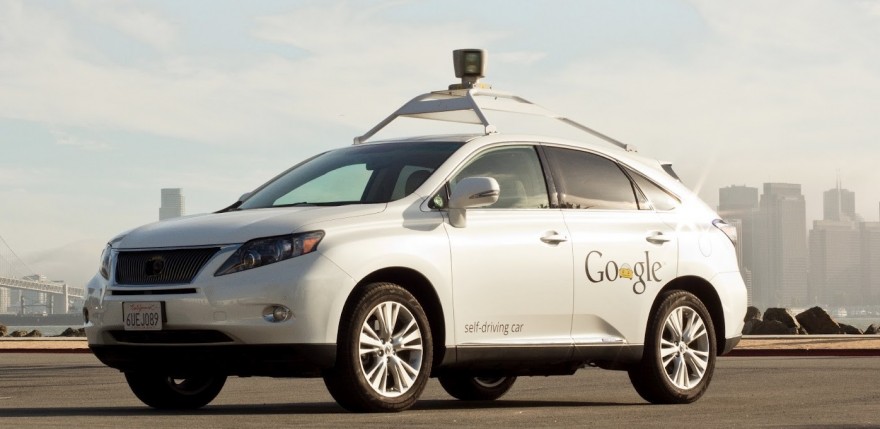
I am not alone in thinking this and the self-driving or autonomous car is well on the way to becoming a reality. My time is split between a project with Stanford University, and consultancy work for a .com located on the Googleplex. Stanford and Google are thought and technology leaders in the autonomous car space, but with very different approaches. Stanford, through the CARS lab (Center for Automotive Research at Stanford), has developed a number of autonomous vehicles, working primarily with VW. “Shelley”, the University’s Audi TT, can now lap the Thunderhill circuit faster driving herself than the engineers who built her. The circuit chairman can still do better, so it seems it will be some time before professional drivers of the skill of Lewis Hamilton or Tony Stewart are going to be threatened by Metal Mickey. Stanford’s focus has been at the micro level, replicating the abilities of the most skilled human drivers. Google’s approach is more macro and philosophically linked to their Google maps and Steet View technology. Their white Lexus RX Hybrids, recognizable by a spinning contraption on the roof, are already driving themselves, and are a frequent sight on the highways around Mountain View, Google’s home base. There is a driver, but only to step in should the car need help: for example, it can spot a child running into the road and stop, but might become confused if it had to decide between avoiding the child and getting out of the way of an emergency vehicle. These two approaches are converging, and should not be seen as competitive, since both elements are crucial if we are to have autonomous cars.
There is significant corporate might behind autonomous cars: ALL of the major carmakers have a presence in Silicon Valley examining these and other types of communications social media and infotainment technologies. Insurance companies are also enthusiastic since something like 95% of insurance claims are caused by human error. The dream for insurance companies is to reduce the involvement of us mistake-prone humans and thereby reduce their claims bill. Progressive already offer a plug-in tool like an aircraft “black box” recorder which monitors how, where and when customers drive and rewards “safe” driving with reduced premiums. You too can give up your privacy/civil liberties in order to save $50. Allianz in Germany are considering introducing something similar.
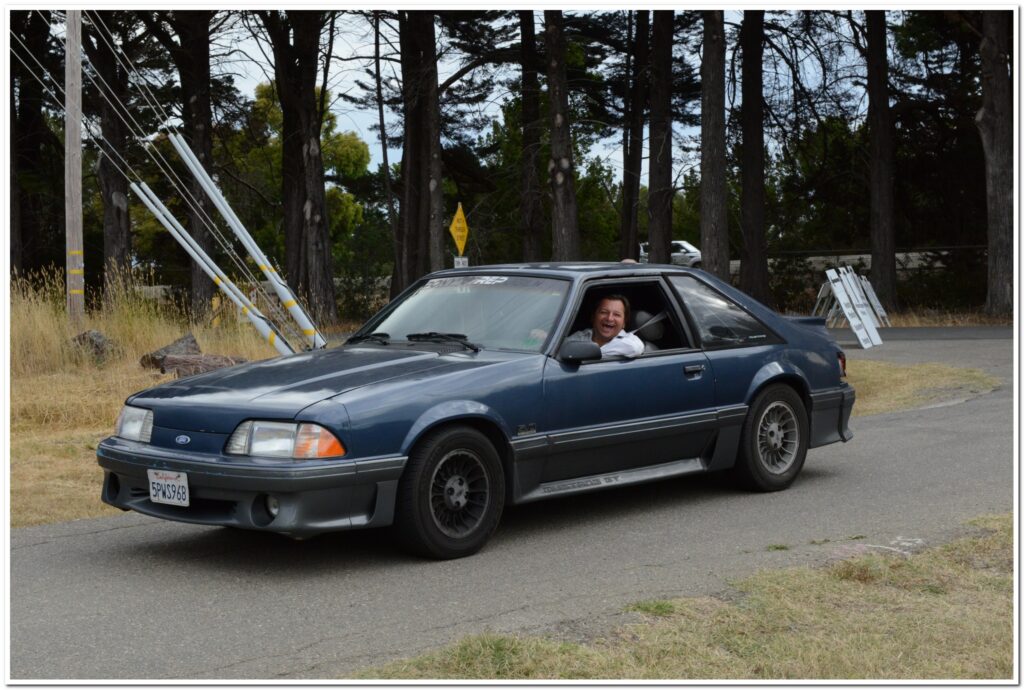
The reality is that we have actually been driving semi-autonomous cars for some time. I have two Mustang GTs, an ’87 and an ’01. Both are crude old dinosaurs, but the ’01 has ABS brakes and traction control. That is to say, when I stab the throttle on the ’87, the car does what I tell it, no questions asked. Spin sideways into that lamp post? Go right ahead. On the ’01, the same stab of the throttle goes through an electronic committee, which decides if the car is going to do as I have told it to, or if it is going to ignore my right foot. A more modern car would also have stability control, further helping us from not getting wrapped around that lamppost, and divorcing a driver further from actual direct control of the car. Inputs are suggestions to the car, not dictats. These near-imperceptible step-by-step changes are significant; it is a truism of change that we tend to over-estimate the impact of technological change in the short term, but under-estimate it in the long term.
Mercedes-Benz seem to have perceived this change in the character of driving some time ago. A four-time AMG Mercedes owner expressed it to me in this way:
“BMWs, they’re for people who really want to DRIVE. Me, I like to feel the power, but I like the car to drive ME – that’s why I like Mercedes….”
Mercedes always offered a cosseting, isolating motoring experience, and, over the last few decades, often coming to market first with these semi-autonomous features. Tending to be conservatively styled, but radical technically, Mercedes-Benz might almost be a metaphor for the coming of the autonomous car; it won’t be a revolution, but rather an evolution. Today we have cruise control which adjusts speed based upon the speed of the car in front, and systems warning drivers if they are straying from their lane; it is only a small step for the car to join these two systems, and be able to drive down the freeway without human help – as, indeed, Google’s cars do.
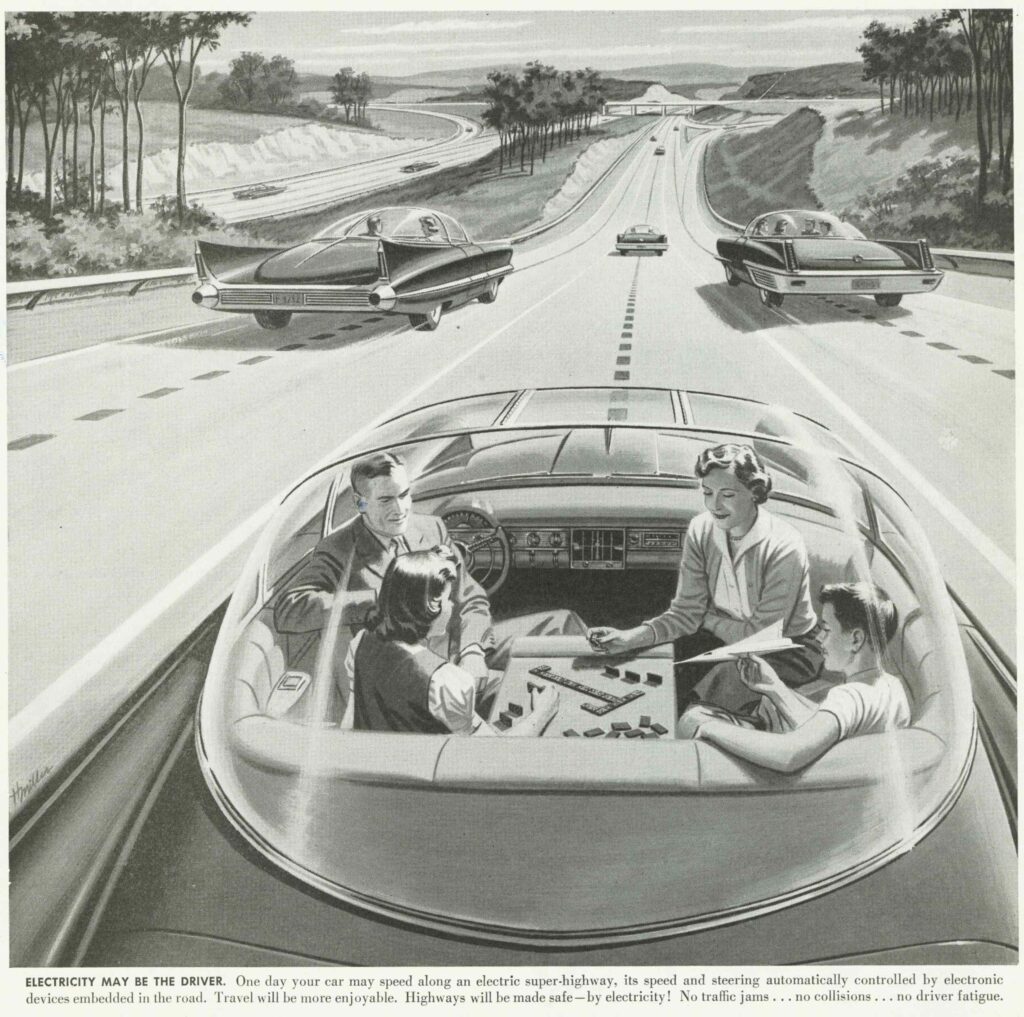
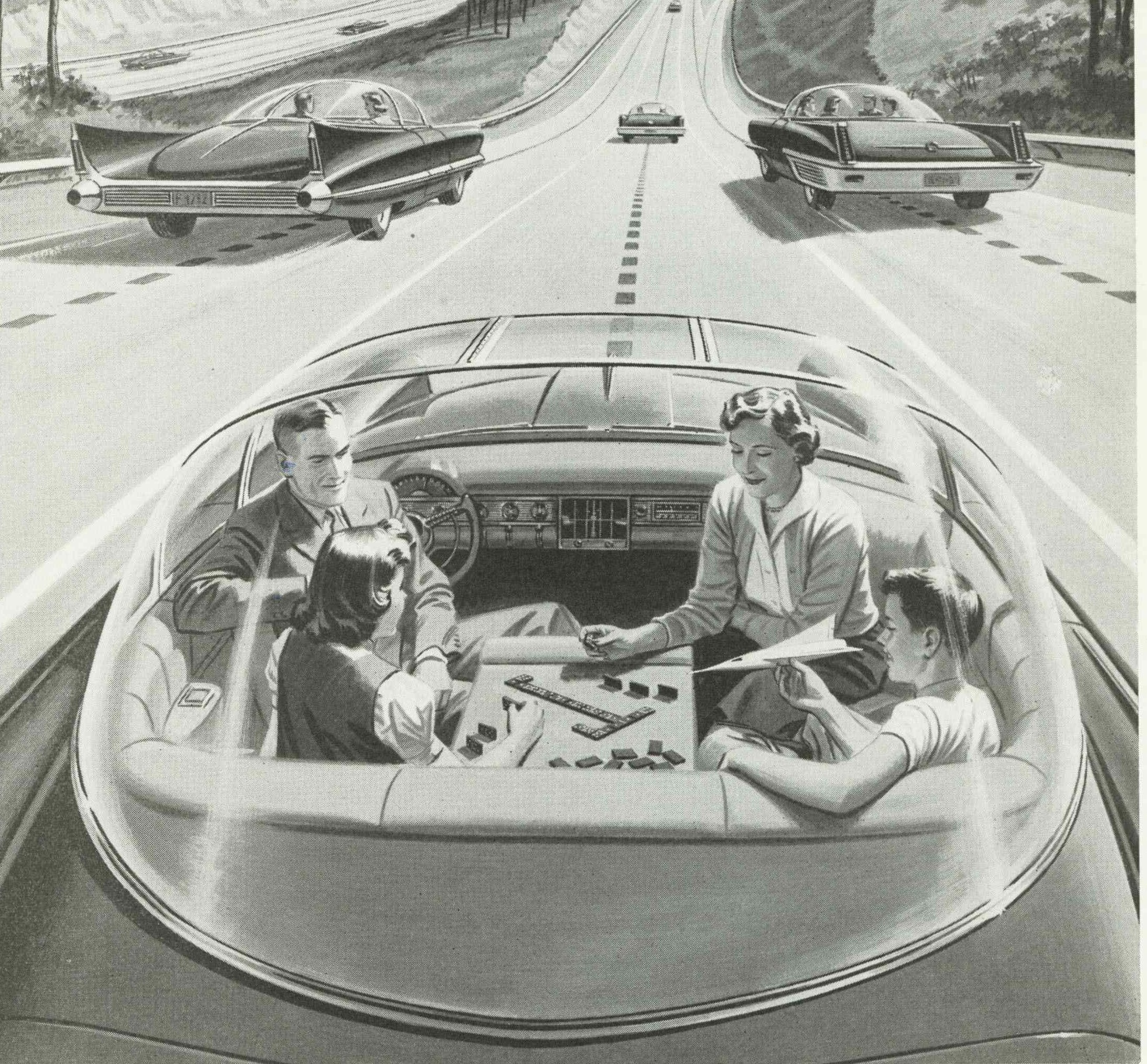
Back in the fifties, they assumed we would all be in flying cars soon; this fantasy persists in science fiction (from Star Wars to Back to the Future, cars fly) without ever actually seeming to come closer to something you or I could go out and buy. The fully autonomous car is perhaps likely to be a similar will-o’-the-wisp. According to the California Air Resources Bureau, it takes eighteen years for a change they legislate to penetrate to 80% of vehicles in California – autonomous cars are not going to be like cell phones, where seemingly everyone had them overnight. Moreover, there are colossal legal challenges. A single bug in the software and gridlocks/pile-ups could easily result. But not to worry, whoever encountered bugs in software? Just imagine the cost of that slip-up in litigious California! GPS/Google maps, those are perfect technologies too, aren’t they? They never struggle on minor/private roads, or if there is new road infrastructure. So what we’re likely to need is a way of having the human step back in and take control should the machine get confused. That, in itself, presents a really interesting conundrum: imagine the car is driving itself down the freeway. Nice and warm, gentle rocking motion, listening to some music you like. You might well drop off to sleep. Some people manage that even with non-autonomous cars. Now there is an emergency, and the car needs you to drive – as one Stanford Professor expressed it,
“…today texting and driving is illegal, but I can imagine a world where it is compulsory….”
This because the car needs you to be doing something to show it that you’re awake, just in case it has an emergency and needs you.
So change is happening, but the fully autonomous car is probably still a decade-plus away, even for folk living in densely populated urban centers. For people living elsewhere, the idea of self-driving autonomous cars is not immediately relevant and probably pretty abhorrent – lucky you.